Mirin Substitute: Your Ultimate Guide to Replacements in Cooking
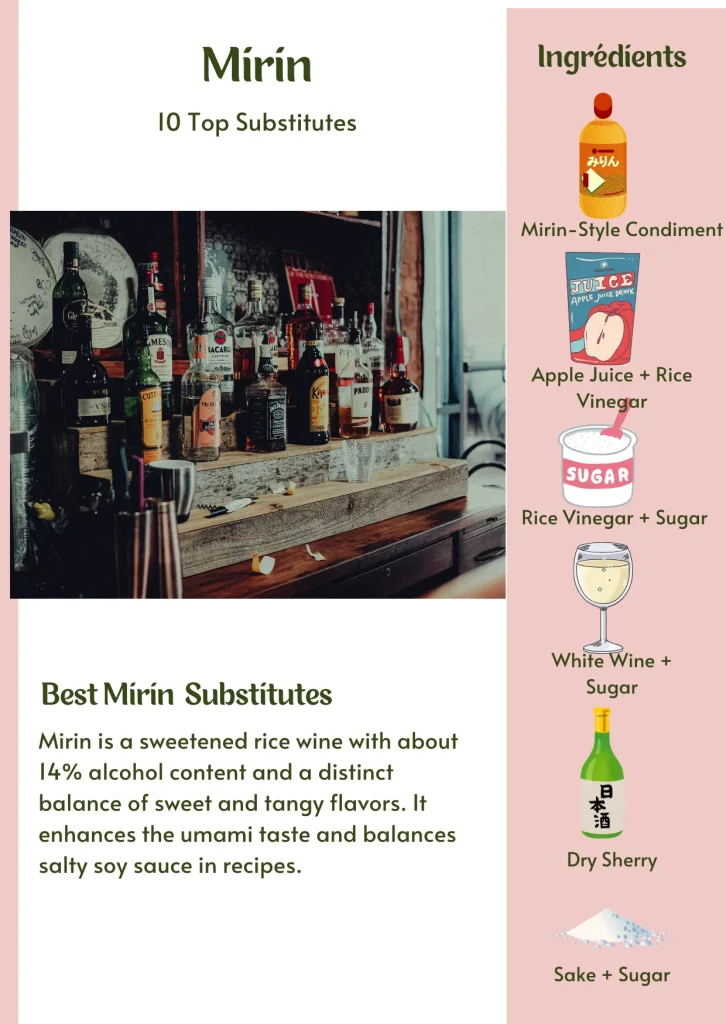
Mirin is a sweet Japanese rice wine (about 14% alcohol) that brings sweetness, mild tang, and umami depth to dishes like teriyaki, sukiyaki, and dipping sauces. When you’re out of it — or avoiding alcohol — the goal of any substitute is the same: replicate that balance of sweetness, acidity, and umami, not just the sweetness alone.
People reach for a substitute for a few common reasons:
- Availability — mirin can be hard to find outside specialty Asian markets
- Alcohol concerns — some cooks prefer non-alcoholic alternatives
- Dietary needs — vegan, low-sugar, or allergy considerations
The six substitutes below cover every situation, from the closest flavor match (sake + sugar) to fully alcohol-free options (rice vinegar + sugar) to grab-and-go commercial condiments.
You can also find Our Best substitute for Soy Sauces and Worcestershire Sauce With ratio and tips to use.
Pick a substitute, enter your amount, get exact measurements — no math required.
Quick Conversion Guide
Most substitutes follow the same ratio — just scale up:
| Mirin Needed | Sake + Sugar | Rice Vinegar + Sugar |
|---|---|---|
| 1 tsp | 1 tsp sake + ¼ tsp sugar | 1 tsp rice vinegar + ¼ tsp sugar |
| 1 tbsp | 1 tbsp sake + 1 tsp sugar | 1 tbsp rice vinegar + 1 tsp sugar |
| 2 tbsp | 2 tbsp sake + 2 tsp sugar | 2 tbsp rice vinegar + 2 tsp sugar |
| ¼ cup | ¼ cup sake + 4 tsp sugar | ¼ cup rice vinegar + 4 tsp sugar |
| ½ cup | ½ cup sake + 8 tsp (2⅔ tbsp) sugar | ½ cup rice vinegar + 8 tsp (2⅔ tbsp) sugar |
For any amount, use a 1:1 ratio of sake or rice vinegar to replace mirin, then add ¼ teaspoon of sugar per teaspoon of liquid to recreate mirin's signature sweetness.

Best Mirin Alternatives for Cooking
1. Sake + Sugar (Best for Teriyaki Sauce)
How to Use:
Mix 1 tablespoon of sake with 1 teaspoon of sugar to replace 1 tablespoon of mirin. Adjust sweetness based on recipe needs.

Flavor Profile:
Similar umami flavor with mild sweetness and slight alcohol aroma.
Best Use:
Great for teriyaki sauce, stir-fries, marinades, and simmered dishes.
Pro Tip:
Simmer the sake briefly to reduce alcohol if preferred.
How to Make a Non-Alcoholic Mirin Substitute
2. Rice Vinegar + Sugar (Mirin Substitute Rice Vinegar with Sugar )
How to Use:
Combine 1 tablespoon rice vinegar with 1 teaspoon sugar per tablespoon of mirin. Reduce vinegar slightly if too tangy.

Flavor Profile:
Tangy and sweet, lacks alcohol but brings acidity to balance dishes.
Best Use:
Perfect for salad dressings, dipping sauces, and quick stir-fries.
Limitations:
Avoid using in recipes where alcohol flavor is essential.
3. Dry Sherry + Sugar | Mirin Substitute
How to Use:
Mix 1 tablespoon dry sherry with 1 teaspoon sugar as a 1:1 mirin substitute.

Flavor Profile:
Nutty with a stronger alcohol presence and sweet notes.
Best Use:
Ideal for rich sauces and marinades requiring depth.
Note:
Not suitable for those avoiding alcohol.
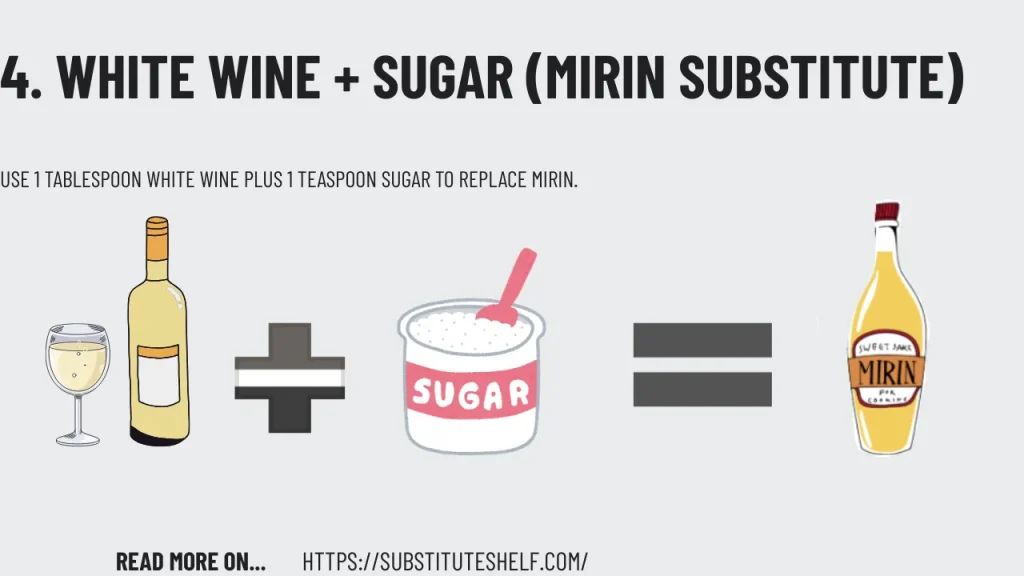
4. White Wine + Sugar | Mirin Substitute
How to Use:
Use 1 tablespoon white wine plus 1 teaspoon sugar to replace mirin.
Flavor Profile:
Mildly fruity and sweet, lighter than sherry.
Best Use:
Good in glazes, lighter sauces, and seafood dishes.
5. Apple Juice + Rice Vinegar | Mirin Substitute
How to Use:
Mix 2 parts apple juice to 1 part rice vinegar to mimic mirin’s sweetness and acidity.

Flavor Profile:
Sweet and tangy but fruitier than mirin.
Best Use:
Quick substitute in a pinch, works well in glazes.
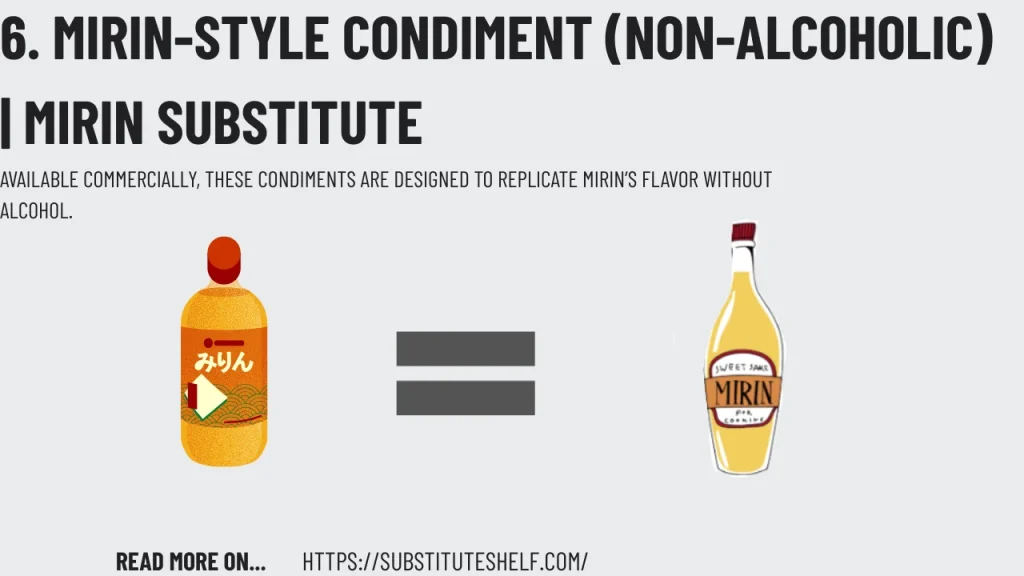
6. Mirin-Style Condiment (Non-Alcoholic)
Description:
Available commercially, these condiments are designed to replicate mirin’s flavor without alcohol.
Best Use:
Direct replacement in any recipe calling for mirin.
Advantage:
Easy and convenient for those avoiding alcohol or seeking quick substitutions.
| Substitute | Flavor Profile | Alcohol Content | Sweetness Level | Best Use Cases | Notes |
|---|---|---|---|---|---|
| Sake + Sugar | Similar umami, mild sweet | Yes | Adjustable | Most cooked dishes, sauces | Mix sake with sugar for sweetness |
| Rice Vinegar + Sugar | Tangy and sweet | No | Adjustable | Stir-fries, dressings | Use less vinegar to avoid overpowering |
| Dry Sherry + Sugar | Nutty, slightly sweet | Yes | Adjustable | Marinades, sauces | Adds depth but stronger alcohol taste |
| White Wine + Sugar | Mildly fruity, sweet | Yes | Adjustable | Sauces, glazes | Use less wine for milder flavor |
| Apple Juice + Rice Vinegar | Sweet and tangy | No | Moderate | Quick substitutes for glazes | Dilute vinegar for balance |
| Mirin-style Condiment | Pre-made non-alcoholic | No | Sweet | Direct mirin replacement | Best for quick use |
Balancing sweetness, acidity, and umami is the key to any good mirin substitute. If you're avoiding alcohol, rice vinegar with a little sugar or a store-bought mirin-style condiment will get you there without sacrificing flavor.
How to Substitute Mirin in Cooking: Tips & Tricks
- Adjust sweetness: Most substitutes require adding sugar or sweetener to balance acidity or alcohol.
- Alcohol reduction: For cooking, simmer alcoholic substitutes briefly to reduce alcohol content.
- Taste test: Always taste your dish after adding substitute, as flavors may shift.
- Use in moderation: Mirin is used sparingly, so the substitute quantities should be kept small to avoid overpowering flavors.
Mirin Substitute in Popular Dishes: Quick Reference Table
| Dish | Best Substitute | Notes |
|---|---|---|
| Teriyaki Sauce | Sake + sugar | Maintain umami and sweetness balance |
| Sukiyaki | Rice vinegar + sugar | Non-alcoholic, tangy alternative |
| Salad Dressing | Rice vinegar + apple juice | Adds freshness without alcohol |
| Marinades | Dry sherry + sugar | Rich depth for meats |
| Glazes | White wine + sugar | Light fruity flavor |
“For a quick mirin substitute non alcoholic, try mixing rice vinegar with sugar to balance acidity and sweetness.”
“If you’re looking for a mirin sauce substitute, combining soy sauce, rice vinegar, and sugar offers a flavorful alternative.”
“Many cooks ask, ‘What can I use instead of mirin?’ Popular choices include sake with sugar, dry sherry, and commercial mirin alternatives.”
What NOT to Use as a Mirin Substitute
Not every sweet or tangy liquid in your pantry will work. Here's what to avoid — and why:
Plain Rice Vinegar (no sugar added)
Rice vinegar alone is too sharp and one-dimensional. Mirin's signature is sweetness balanced with acidity — vinegar without sugar just tastes sour and thin, and can throw off the whole dish.
Regular White Vinegar
White vinegar is much harsher and more acidic than rice vinegar, with none of mirin's rounded sweetness. It will make sauces taste sharp and artificial rather than balanced. If it's all you have, dilute it and add extra sugar — but treat it as a last resort, not a direct swap.
Balsamic Vinegar
Too dark, too sweet in the wrong way, and too strong in flavor. It will overpower delicate dishes like dashi-based sauces or light glazes and change the color of the dish.
Plain Sugar Water
Adds sweetness but none of the acidity, umami, or complexity mirin brings. Dishes will taste flat and one-note.
Sweet Cooking Wine Labeled "Mirin" with High-Fructose Corn Syrup
Some cheap "mirin-style" bottles use corn syrup and artificial flavoring instead of real fermentation. They tend to taste syrupy and lack the depth of true mirin or a proper sake-based substitute. Check the label — real mirin or a quality substitute should list rice, koji, or sake as key ingredients, not corn syrup as the first item.
Straight Sake (no sugar added)
Sake alone lacks mirin's sweetness entirely. Using it 1:1 without adjusting sugar will leave your dish missing the balance mirin is known for.
FAQ About Mirin Substitute
Q1: Can I use sake as a substitute for mirin?
Yes! Mix sake with sugar to replicate the sweetness and umami of mirin.
Q2: What’s the best non-alcoholic substitute for mirin?
Rice vinegar mixed with sugar or mirin-style non-alcoholic condiments are your best options.
Q3: Can I substitute mirin with white wine?
Yes, but add sugar and use it in recipes where a milder flavor is desired.
Q4: How much sugar should I add to substitutes?
Typically, 1 teaspoon sugar per tablespoon of substitute mimics mirin’s sweetness well.
Q: What is the best mirin substitute?
A: The best mirin substitute depends on your recipe, but a popular and versatile option is sake mixed with sugar for a close match. For non-alcoholic alternatives, rice vinegar combined with sugar or commercially available mirin-style condiments work well.
Q: Can I use mirin substitute soy sauce rice vinegar sugar mix?
A: Yes! A common homemade mirin substitute is a mix of soy sauce, rice vinegar, and sugar, which balances sweetness and acidity, making it ideal for sauces like teriyaki or stir-fries.
Q: What can I use as a non-alcoholic mirin substitute?
A: Non-alcoholic mirin substitutes include rice vinegar with added sugar, apple juice with rice vinegar, or store-bought mirin-style condiments. These options provide sweetness and tang without alcohol.
Q: How do I replace mirin in teriyaki sauce?
A: Use a mirin substitute in teriyaki sauce like sake and sugar or a rice vinegar and sugar blend. Adjust the sweetness to maintain the authentic flavor profile.
Conclusion
While nothing perfectly replicates mirin’s unique flavor, these mirin substitutes come close and can keep your recipes authentic and delicious. Whether you choose sake and sugar for the closest match, or opt for a non-alcoholic mix like rice vinegar and sugar, you’ll still achieve balanced sweetness and umami in your cooking.
For quick, hassle-free cooking, pre-made mirin-style condiments offer a great alternative.
Try these substitutes confidently and bring the taste of Japanese cuisine to your table — no mirin needed.

Hi, I’m Katty, and I love helping home cooks find easy, tested ingredient replacements that actually work. All substitutes on this site are based on real kitchen experience and food science — so you can cook confidently every time!
Similar Posts
Cream Cheese Substitute
Cream Cheese Substitute: Best Alternatives for Baking, Cooking & Spreads What Is Cream Cheese and Why You Might Need a Substitute Cream cheese is a soft, mildly tangy fresh cheese made from milk and cream. It’s widely used in cheesecakes, frostings, dips, sauces, and spreads. You may need a cream cheese substitute due to dietary…
Fontina Cheese Substitute
Fontina Cheese Substitute: 10 Best Alternatives for Pasta, Pizza & Fondue The best fontina cheese substitute depends on the recipe, but the closest alternatives include Gruyère, mozzarella, provolone, Gouda, and cheddar. These cheeses melt smoothly and provide a similar creamy texture and mild nutty flavor. For pasta, pizza, fondue, and mac and cheese, these substitutes…
potato starch substitute
Potato Starch Substitute: 15 Best Alternatives for Thickening, Frying, and Baking Potato starch is a versatile ingredient commonly used as a thickener, coating, and gluten-free baking ingredient. Extracted from potatoes, it has a neutral flavor and creates a smooth, silky texture in soups, sauces, gravies, and baked goods. But what if you run out of…
Garlic Salt Substitute
Garlic Salt Substitute: 10 Best Alternatives for Cooking & Seasoning A garlic salt substitute can be made easily using common pantry ingredients. The best option is garlic powder mixed with salt, but you can also use onion powder, fresh garlic with salt, garlic flakes, or seasoning blends. These alternatives help replicate the savory garlic flavor…
Salted butter substitutes
Best Salted Butter Substitutes: 10 Easy Alternatives for Baking & Cooking Salted butter is a staple in kitchens worldwide, used in baking, cooking, and finishing dishes. But what happens when you run out or need a healthier or vegan alternative? Fortunately, several substitutes can mimic salted butter’s flavor, texture, and fat content without compromising your…