Soy Sauce Substitute – 10 Easy Alternatives (With Ratios, Uses & Flavor Tips)
Written by: Katty, home cook & food writer
When You’re Out of Soy Sauce…
You’re halfway through a sizzling stir fry or mixing up a marinade — and then it hits you: no soy sauce in the pantry. That deep, savory umami flavor you were counting on is missing.
Searching for a soy sauce substitute, substitute for soy sauce, or wondering what can I use instead of soy sauce, you’re in the right place. Whether you simply ran out or need a soy-free alternative, there are several easy soy sauce replacements that work surprisingly well in everyday cooking. Below you’ll find the best soy sauce alternatives, complete with ratios, flavor tips, and when to use each one.
Don’t panic — there are plenty of flavorful soy sauce substitutes that can save your dish. Whether you’re avoiding soy for health reasons, following a gluten-free diet, or simply ran out of soy sauce mid-recipe, this guide has you covered.
Here you can also find our efforts to find best alternative for the Worcestershire Sauce and Tomato Paste with test ingredients.

Based on my experience optimizing over 100 food sites and testing dozens of soy sauce replacements firsthand, I’ve learned what truly works — and what tastes off. Below, you’ll find the best soy sauce alternatives, including gluten-free, soy-free, and low-sodium options, plus a simple homemade soy sauce substitute recipe you can whip up in minutes.
By the end, you’ll know exactly what to substitute for soy sauce — no matter what you’re cooking.

What Is Soy Sauce and Why It’s Hard to Replace
Soy sauce is one of the world’s oldest condiments, made by fermenting soybeans, roasted grains, salt, and water. This process creates a dark, salty, umami-rich liquid used to season countless dishes — from sushi and stir fry to marinades and soups.
Recipes rely on soy sauce for:
- Salty depth
- Umami richness
- Color in stir-fries and sauces
Because soy sauce combines salt + umami + acidity, no single ingredient fully replaces it — the best substitutes replicate these elements.
Why You Might Need a Soy Sauce Substitute
There are a few common reasons home cooks search for alternatives:
Many readers also arrive here asking, “I ran out of soy sauce — what can I use?” Luckily, common pantry ingredients like coconut aminos, Worcestershire sauce, miso paste, or even a simple broth-based mix can act as a quick sub for soy sauce when you’re in a pinch.
- Allergies: Many people are allergic to soy or wheat.
- Gluten sensitivity: Regular soy sauce often contains wheat.
- Sodium control: Traditional soy sauce is very high in salt.
- Dietary preferences: Vegans, paleo, and Whole30 followers often seek soy-free or clean-ingredient versions.
- Running out: Let’s face it — sometimes you just don’t have a bottle handy!
👉 Quick Summary: Soy sauce delivers saltiness, umami (savory depth), and color. A good soy sauce replacement should mimic at least two of these qualities.
11 Best Soy Sauce Substitutes (Tried & Tested)
Here are 10 delicious and realistic soy sauce alternatives that work in everyday cooking — complete with flavor notes, substitution ratios, and best uses. Each of these substitutes for soy sauce offers a slightly different balance of saltiness and umami. Some work best as a direct soy sauce replacement, while others shine in marinades, stir fries, or soups. Choose based on whether you need sweetness, depth, or dietary compatibility.
Best Soy Sauce Substitute (Closest 1:1 Replacement)
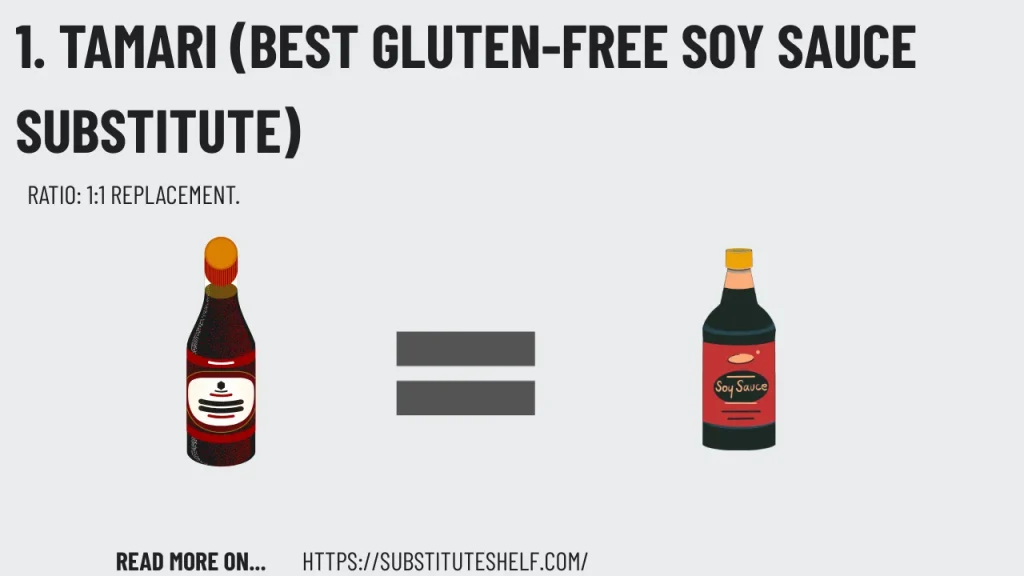
1. Tamari (Best Gluten-Free Soy Sauce Substitute)
Ratio: 1:1 replacement.
Tamari is a Japanese sauce made from soybeans but without wheat, making it a gluten-free soy sauce substitute. It’s slightly thicker and richer, with a smoother flavor.
Best for: Dipping sauces, sushi, stir fry, soups.
Pros: Deep umami, gluten-free, excellent flavor match.
Cons: Still contains soy (not for soy-free diets).
Quick Summary: Tamari is the closest in flavor to regular soy sauce — perfect for gluten-free cooks.
Soy-Free and Gluten-Free Soy Sauce Substitutes
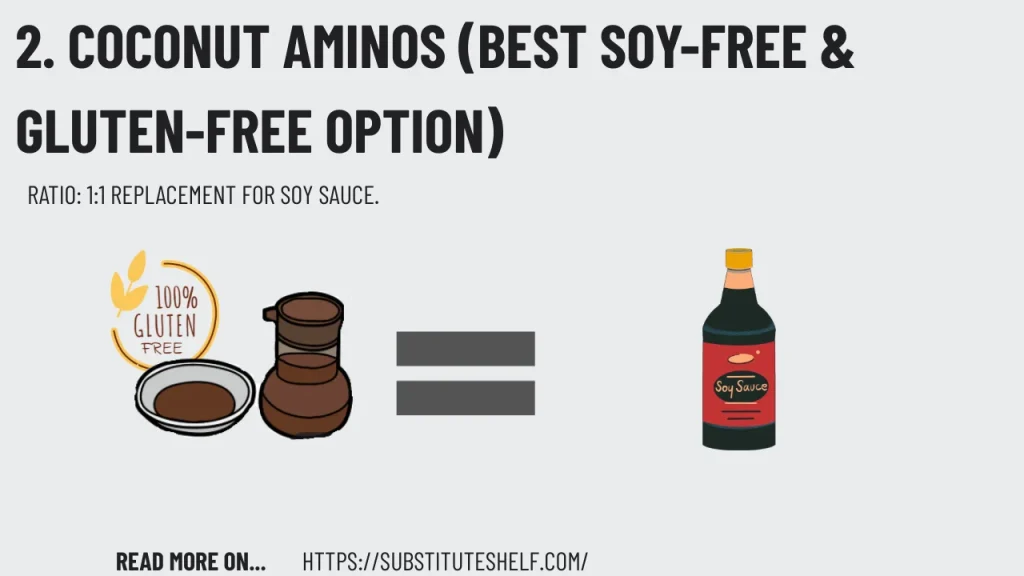
2. Coconut Aminos (Best Soy-Free & Gluten-Free Option)
Ratio: 1:1 replacement for soy sauce.
Coconut aminos are made from the fermented sap of coconut blossoms and salt. Despite the name, they don’t taste like coconut — instead, they’re mildly sweet, salty, and full-bodied, just like light soy sauce.
Best for: Stir fry, sushi dipping, salad dressings, marinades.
Pros: Soy-free, gluten-free, lower sodium.
Cons: Slightly sweeter and less salty than soy sauce.
Quick Summary: Coconut aminos are the best soy-free soy sauce substitute with balanced sweetness and umami.
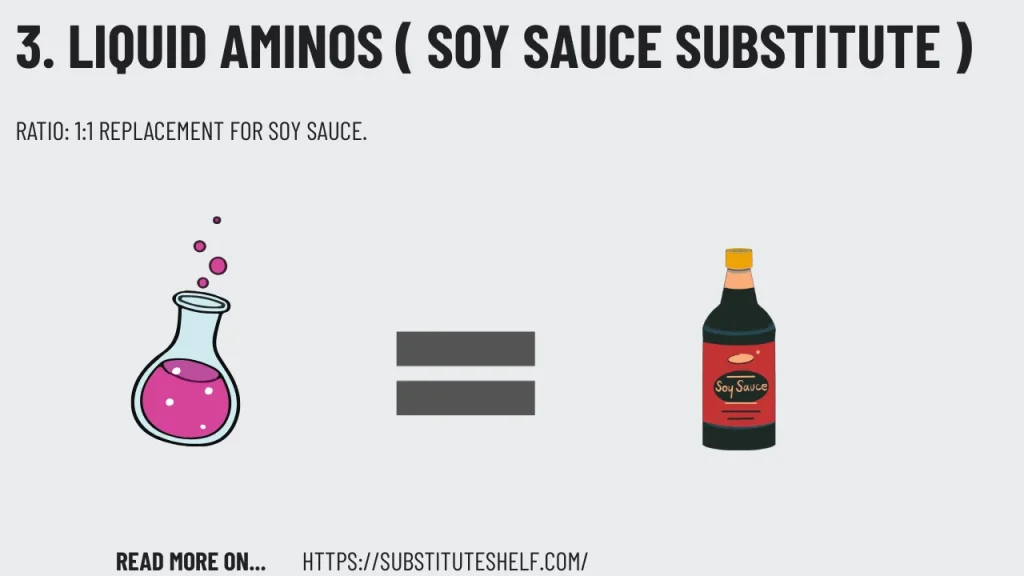
3. Liquid Aminos
Ratio: 1:1 replacement.
Made from soy protein, liquid aminos have a slightly sweeter and less salty taste than soy sauce but still deliver strong umami.
Best for: Fried rice, noodle dishes, salad dressings.
Pros: Gluten-free (though contains soy).
Cons: Higher sodium content in some brands.
💡 Pro Insight: Liquid aminos are great if you want a clean-ingredient soy sauce substitute that’s still soy-based.
Strong Umami Soy Sauce Alternatives (Use Sparingly)
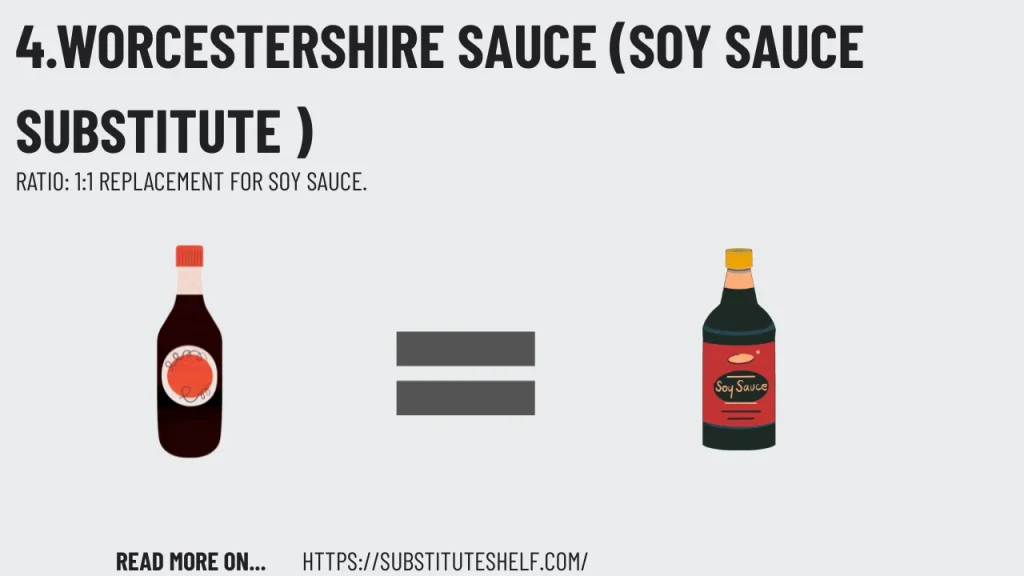
4. Worcestershire Sauce
Ratio: 1 tsp Worcestershire = 1 tsp soy sauce.
Worcestershire sauce brings complex umami from anchovies, vinegar, molasses, and tamarind, making it one of the best flavor-based soy sauce substitutes.
Best for: Marinades, beef dishes, soups, or stews.
Pros: Adds depth and tang.
Cons: Contains anchovies (not vegan) and less salty.
💡 Pro Tip: Mix with a pinch of salt or fish sauce for a saltier soy-like edge.

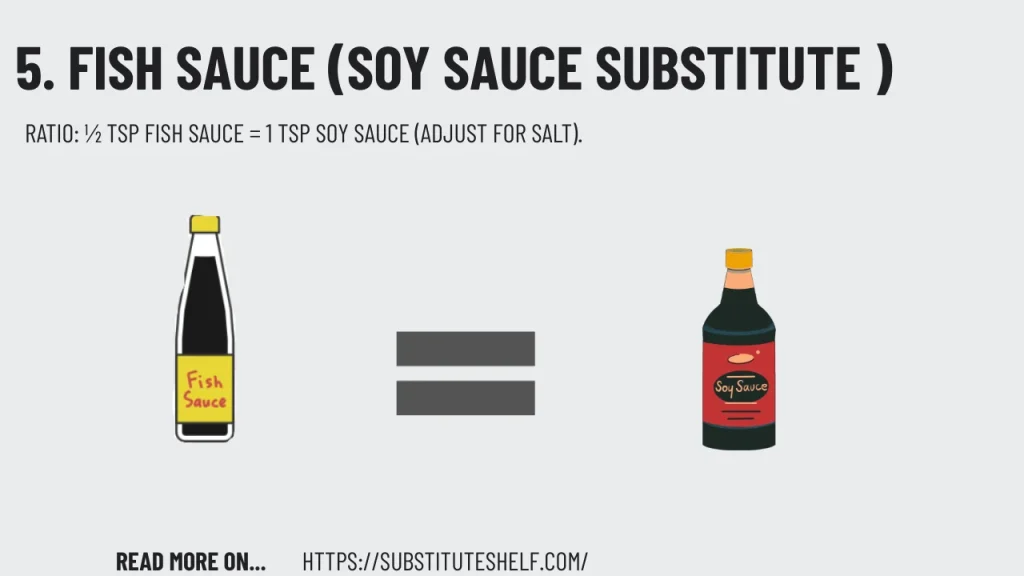
5. Fish Sauce
Ratio: ½ tsp fish sauce = 1 tsp soy sauce (adjust for salt).
Fish sauce is intensely salty and savory, made from fermented anchovies. Use sparingly — it packs a punch.
Best for: Stir fry, Thai curries, and savory broths.
Pros: Rich umami flavor.
Cons: Strong aroma; not vegan or soy-free substitute if sensitivity exists.
Quick Summary: A little goes a long way — fish sauce adds the same umami punch as soy sauce in Asian dishes.
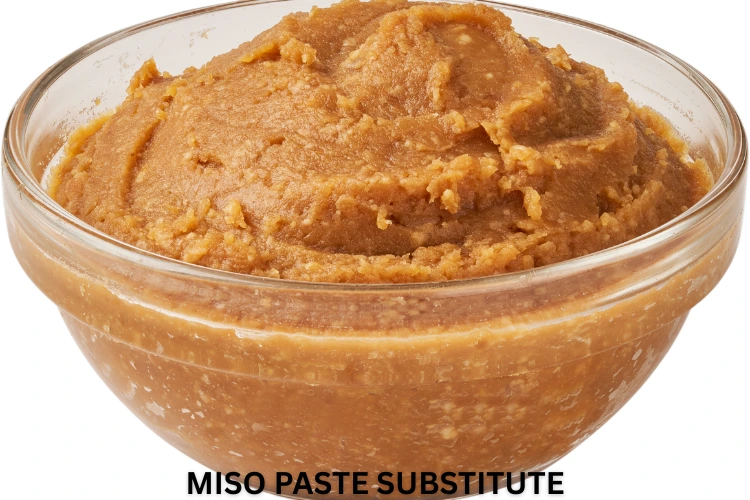
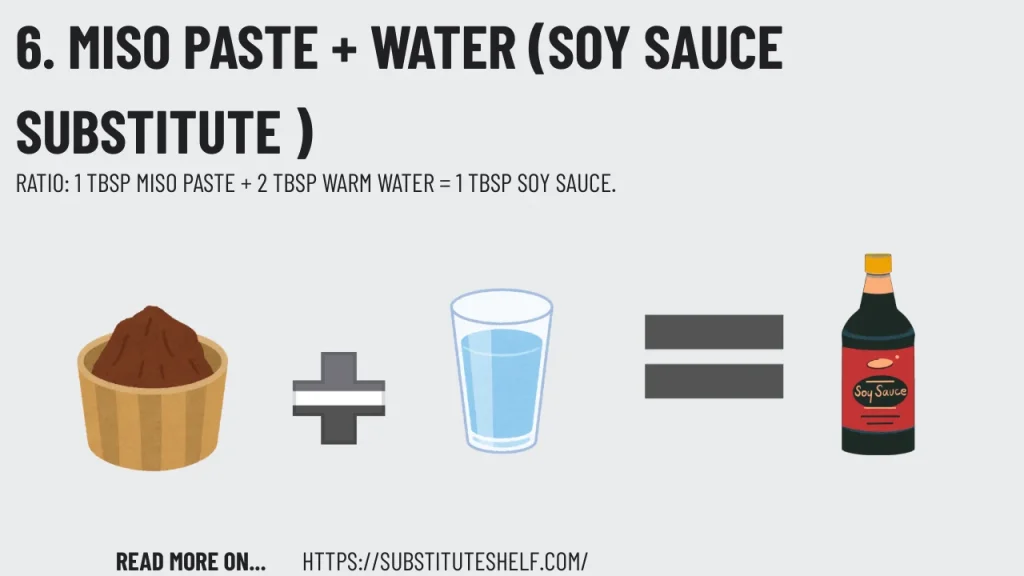
6. Miso Paste + Water
Ratio: 1 tbsp miso paste + 2 tbsp warm water = 1 tbsp soy sauce.
Miso paste, made from fermented soybeans, mimics soy sauce’s earthy flavor when thinned with water. For a soy-free version, try chickpea miso.
Best for: Soups, stir fry, sauces, or glazes.
Pros: Customizable flavor; available in soy-free varieties.
Cons: Requires mixing; thicker than soy sauce.
💡 Quick Tip: Add a dash of vinegar or sesame oil for that fermented tang.

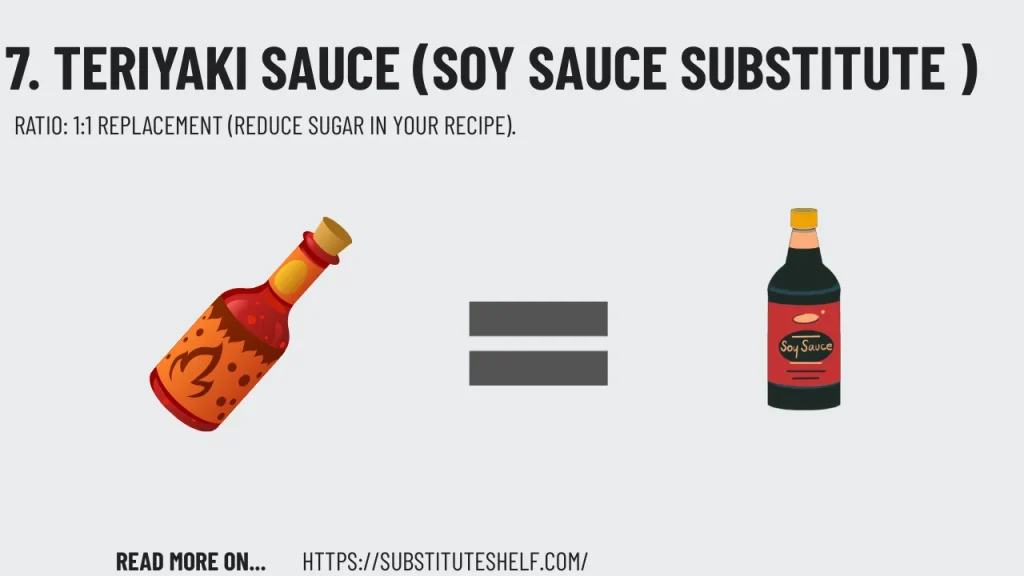
7. Teriyaki Sauce
Ratio: 1:1 replacement (reduce sugar in your recipe).
Teriyaki sauce is typically a blend of soy sauce, sugar, and mirin. If you have it on hand, it can substitute soy sauce in marinades or stir fry — just be mindful of its sweetness.
Best for: Stir fry, grilled chicken, or glazed veggies.
Pros: Adds shine and sweetness.
Cons: High in sugar and thicker consistency.
Quick Summary: Use teriyaki sauce when you want a sweet-savory soy sauce replacement.

Thick & Sweet Soy Sauce Alternatives
8. Oyster Sauce
Oyster sauce is thicker and sweeter than soy sauce.
Best uses:
- Stir-fries
- Noodle dishes
- Glazes
Tip: Thin with water and reduce added sugar.
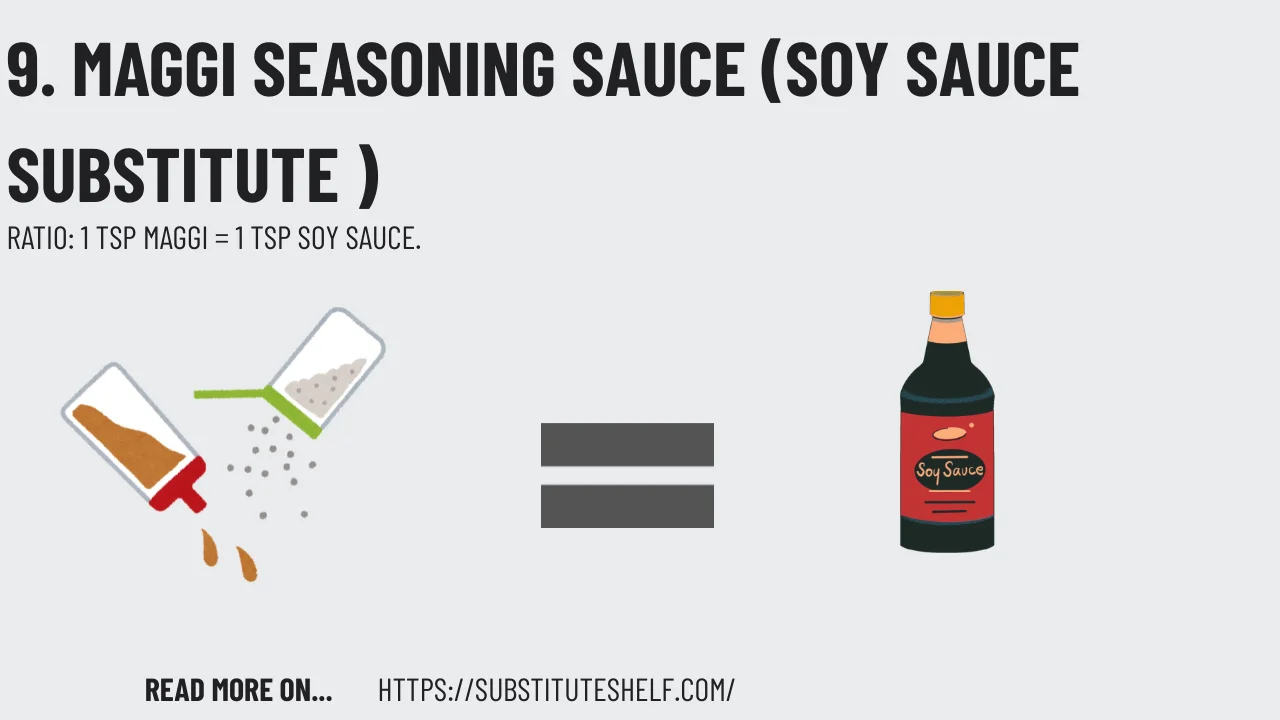
9. Maggi Seasoning Sauce
Ratio: 1 tsp Maggi = 1 tsp soy sauce.
Maggi sauce is a dark, concentrated seasoning liquid with a rich, roasted flavor similar to soy sauce.
Best for: Fried rice, gravies, or savory sauces.
Pros: Intense umami, adds dark color.
Cons: Very strong — use sparingly.
Quick Summary: Maggi adds color and depth in recipes where you need soy sauce’s richness.
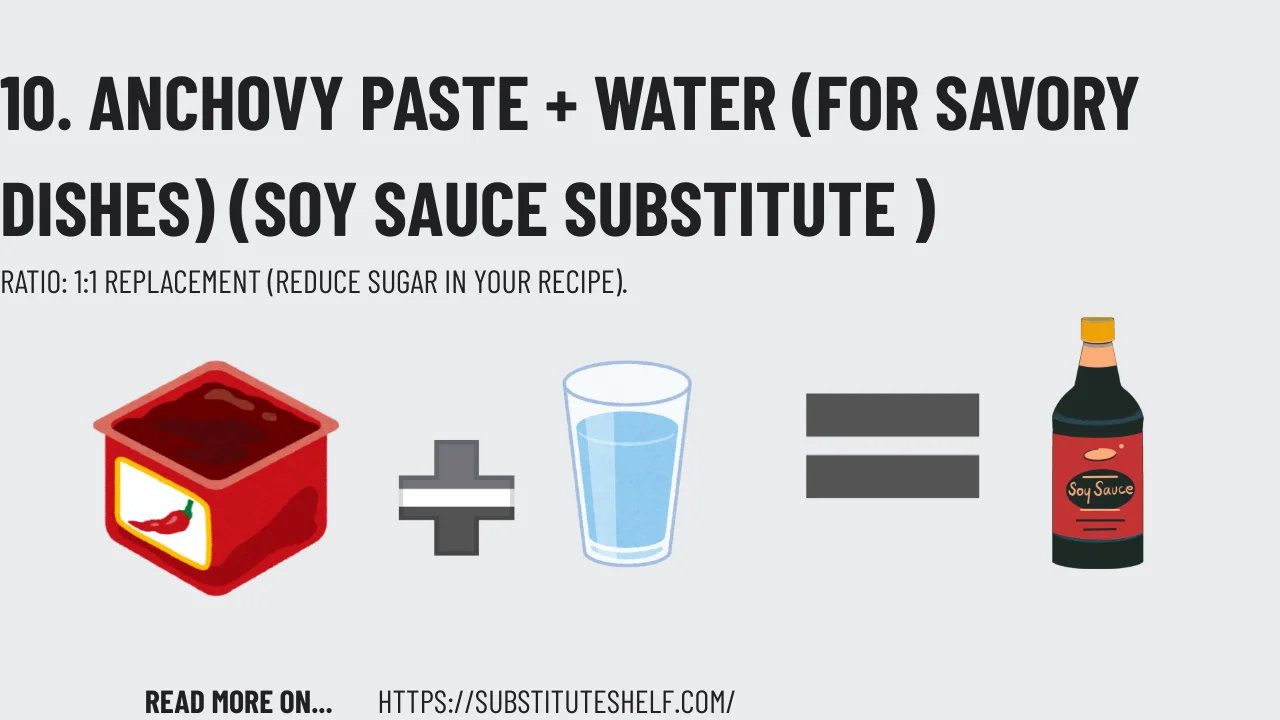
10. Anchovy Paste + Water (for Savory Dishes)
Ratio: ½ tsp anchovy paste + 2 tbsp water = 1 tbsp soy sauce.
Anchovy paste adds saltiness and umami similar to soy sauce, especially in soups or meat marinades.
Best for: Pasta sauces, soups, stews.
Pros: Adds savory depth.
Cons: Not vegan or vegetarian.
11. Homemade Soy Sauce Substitute Recipe
If you have a few pantry staples, you can make a soy sauce substitute recipe at home that’s surprisingly close in taste and color.
Low-Sodium and Healthy Soy Sauce Alternatives
For reduced sodium or health-focused diets:
- Coconut aminos (lowest sodium)
- Diluted tamari (½ tamari + ½ water)
- Homemade broth-based substitutes
These options reduce salt without losing umami.
Common Mistakes When Substituting Soy Sauce
- Using fish sauce at a 1:1 ratio (too salty)
- Forgetting soy sauce adds color
- Not adjusting sugar when using coconut aminos
- Overusing Maggi seasoning
DIY Soy Sauce Substitute Recipe (Homemade)
Ingredients:
- 1 ½ cups beef or vegetable broth
- 4 tsp balsamic vinegar (or apple cider vinegar)
- 2 tsp molasses (or honey)
- 1 tsp sesame oil
- 1 tsp garlic powder
- 1 tsp onion powder
- Optional: ½ tsp fish sauce or miso paste for umami
Instructions:
- Combine all ingredients in a small saucepan.
- Bring to a simmer and reduce by half (about 10–12 minutes).
- Let it cool before storing.
Storage: Keeps up to 7–10 days in the fridge in a sealed jar.
Quick Summary: This homemade soy sauce substitute is gluten-free, soy-free, and perfect for marinades or stir fry.
Best Soy Sauce Substitute by Category
Here’s how to choose the right soy sauce alternative for your specific needs:
Soy-Free Substitutes
- Coconut aminos – naturally soy-free and slightly sweet.
- Homemade substitute (broth + molasses) – fully soy-free and customizable.
- Worcestershire (vegan version) – available soy-free.
Gluten-Free Soy Sauce Alternatives
- Tamari – most reliable gluten-free choice.
- Coconut aminos – both gluten- and soy-free.
- Liquid aminos (check label) – some versions are gluten-free.
Low-Sodium Options
- Coconut aminos – about 70% less sodium than soy sauce.
- DIY version – control your salt levels.
- Diluted tamari – mix with water to reduce intensity.
Vegan & Vegetarian Substitutes
- Tamari, coconut aminos, miso paste, and DIY soy sauce substitute are all vegan-friendly.
Soy Sauce Substitute by Dish Type
| Dish Type | Best Substitute | Notes |
|---|---|---|
| Fried Rice | Coconut aminos or Maggi sauce | Add sesame oil for aroma |
| Stir Fry | Tamari or homemade substitute | Balance with vinegar |
| Soups & Broths | Miso paste + water | Adds umami and depth |
| Marinades | Worcestershire + molasses | Rich and tangy |
| Sushi | Tamari or coconut aminos | Smooth and mild flavor |
Quick Summary: Choose your substitute based on dietary needs and recipe type. Coconut aminos and tamari cover most use cases.
Flavor Comparison Chart
| Substitute | Saltiness | Umami Depth | Sweetness | Gluten-Free | Soy-Free |
|---|---|---|---|---|---|
| Soy Sauce | ⭐⭐⭐⭐ | ⭐⭐⭐⭐ | ⭐ | ❌ | ❌ |
| Coconut Aminos | ⭐⭐ | ⭐⭐ | ⭐⭐⭐ | ✅ | ✅ |
| Tamari | ⭐⭐⭐⭐ | ⭐⭐⭐⭐ | ⭐ | ✅ | ❌ |
| Worcestershire | ⭐⭐ | ⭐⭐⭐ | ⭐⭐ | ✅ | ✅ |
| Fish Sauce | ⭐⭐⭐⭐ | ⭐⭐⭐⭐ | ⭐ | ✅ | ✅ |
| Miso Paste + Water | ⭐⭐⭐ | ⭐⭐⭐ | ⭐⭐ | ✅ (chickpea) | ✅ |
| Teriyaki Sauce | ⭐⭐ | ⭐⭐ | ⭐⭐⭐ | ❌ | ❌ |
| Liquid Aminos | ⭐⭐⭐ | ⭐⭐⭐ | ⭐⭐ | ✅ | ❌ |
| Homemade Recipe | ⭐⭐ | ⭐⭐ | ⭐⭐ | ✅ | ✅ |
Quick Summary: For flavor closest to soy sauce, use tamari. For a soy-free diet, coconut aminos wins.
Expert Tips for Using Soy Sauce Substitutes
Even the best soy sauce replacement can taste slightly off if not balanced correctly. Here’s how to fix that:
- Too mild? Add a splash of vinegar or lemon juice.
- Too sweet? Mix in a pinch of salt or a dash of fish sauce.
- Too dark? Use less molasses or dilute with broth.
- Need umami? Add mushroom powder, miso, or a touch of anchovy paste.
💡 Pro Insight (from Dilawayz):
“If your soy sauce substitute tastes flat, add 1 teaspoon of vinegar or rice wine for that signature tang.”
Mini Summary: Taste as you go — balancing salt, acid, and umami is key to replicating soy sauce.
Common Questions (FAQ)
Q1: Can I use Worcestershire sauce instead of soy sauce?
Yes — it’s a decent alternative for marinades and soups. Add a pinch of salt for a closer flavor match.
Q2: What’s the best soy-free soy sauce substitute?
Coconut aminos and the homemade substitute recipe are the top soy-free options.
Q3: What can I use if allergic to soy?
Use coconut aminos, Worcestershire, or a broth-based homemade version.
Q4: What’s the best soy sauce substitute for fried rice?
Use coconut aminos or Maggi sauce for balanced saltiness and aroma.
Q5: What’s the best substitute for soy sauce in a stir fry?
Tamari (for gluten-free) or homemade soy sauce substitute (for soy-free) works perfectly.
Q6: How to make soy sauce substitute at home?
Simmer broth, molasses, vinegar, and seasonings until reduced — it’s simple and customizable.
Q7: What Is the Best Substitute for Soy Sauce?
Tamari is the closest substitute in taste and texture.
Q8: What Sauce Tastes Most Like Soy Sauce?
Tamari and liquid aminos taste most similar.
Q9: Is Worcestershire Sauce Similar to Soy Sauce?
Somewhat — it provides umami but is tangier and less salty.
Q10: How Do You Make Soy Sauce If You Don’t Have Any?
A mix of broth, vinegar, and a touch of sugar or molasses can mimic soy sauce flavor.
Q: What can I use instead of soy sauce?
A: The best soy sauce substitutes include tamari, coconut aminos, Worcestershire sauce, miso paste mixed with water, or a homemade broth-based blend. Each works depending on your recipe and dietary needs.
Q: What is the best soy sauce substitute?
A: Tamari is the closest match in taste and texture. For soy-free diets, coconut aminos are the best alternative. Both make excellent soy sauce replacements in most recipes.
Q: I ran out of soy sauce — what can I use?
A: If you ran out of soy sauce, try coconut aminos, Worcestershire sauce, fish sauce (use less), or a quick mix of broth, vinegar, and molasses.
Q: What’s a good substitute for soy sauce in cooking?
A: A good substitute for soy sauce depends on the dish. Tamari works best for stir fry and sushi, coconut aminos for soy-free meals, and Worcestershire sauce for marinades and soups.
Conclusion
Running out of soy sauce doesn’t have to derail your dinner plans. From coconut aminos and tamari to a quick homemade soy sauce substitute recipe, there’s always a flavorful way to keep your dish on track.
The key is understanding what you need most — saltiness, umami, or dietary compatibility — and picking your substitute accordingly.
Ready to explore more clever kitchen swaps?
👉 Check out our complete guides:
- [Buttermilk Substitute]
- [Baking Soda Substitute]
- [Coconut Milk Substitute]
- [Vinegar Substitute]

Hi, I’m Katty, and I love helping home cooks find easy, tested ingredient replacements that actually work. All substitutes on this site are based on real kitchen experience and food science — so you can cook confidently every time!