Milk Substitute: The Ultimate Guide to Perfect Alternatives for Every Recipe
When you find yourself out of milk or following a special diet, having reliable milk substitutes on hand is essential. Whether you need an evaporated milk substitute, a coconut milk substitute, or a substitute for milk in baking, this comprehensive guide has you covered. Based on extensive research and culinary experience, we’ll explore a variety of options with their uses, flavor impacts, and ratios to help you find the perfect milk substitute for any dish.

You can also explore our tested substitute for baking powder and baking soda.
What Is Milk and Why Substitute It?
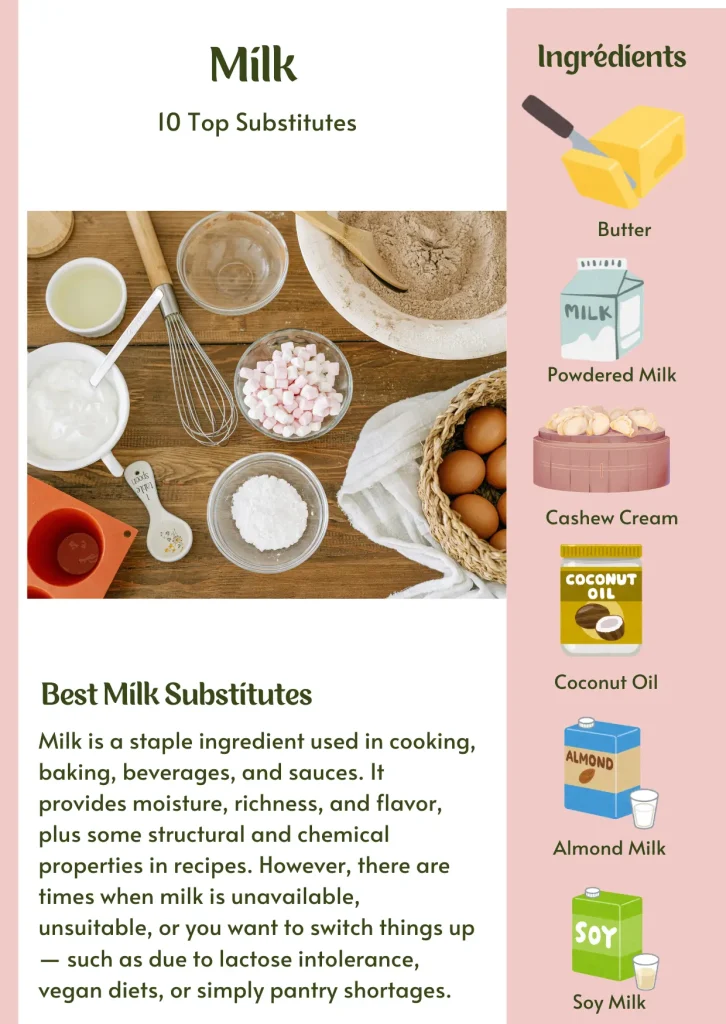
Milk is a staple ingredient used in cooking, baking, beverages, and sauces. It provides moisture, richness, and flavor, plus some structural and chemical properties in recipes. However, there are times when milk is unavailable, unsuitable, or you want to switch things up — such as due to lactose intolerance, vegan diets, or simply pantry shortages.
Different substitutes work best depending on your recipe — for instance, the requirements for a creamy sauce differ from those for baking a moist cake. This article will walk through popular milk substitutes, including dry milk substitute, evaporated milk substitute, coconut milk substitute, and more, so you can choose confidently.

Evaporated Milk Substitute
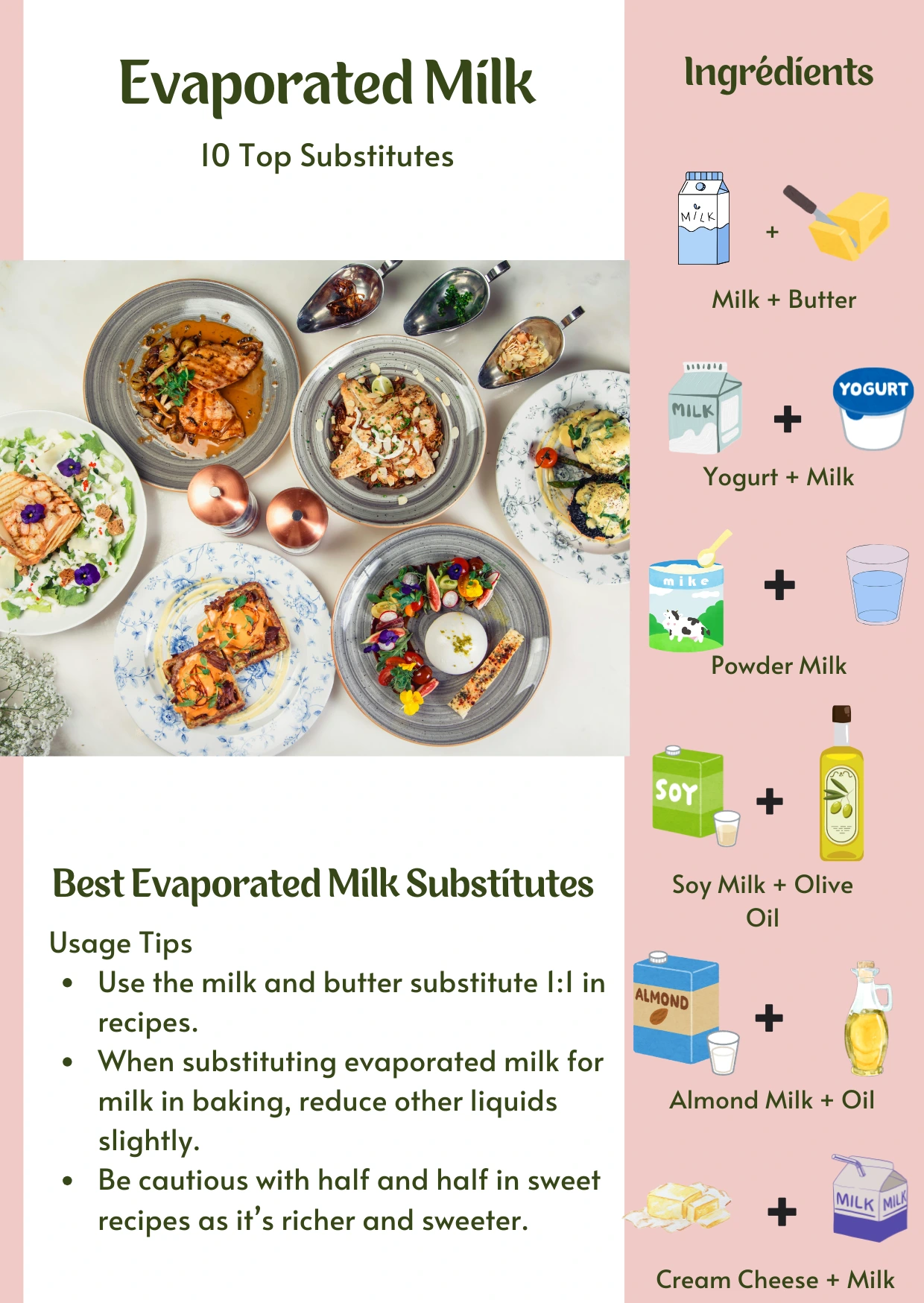
Evaporated milk is milk with about 60% of its water content removed, giving it a rich, creamy texture. It’s often used in desserts, sauces, and soups where creaminess is desired without the full fat of heavy cream.
Common Evaporated Milk Substitutes
- Milk and Butter: Combine 1 cup whole milk with 2 tablespoons melted butter to mimic the fat content of evaporated milk. This mix provides richness and body to your recipes.
- Powdered Milk: Reconstitute dry milk powder with slightly less water than recommended for regular milk to achieve a concentrated milk consistency similar to evaporated milk.
- Half and Half: Can substitute evaporated milk in many recipes, especially sauces and soups, providing richness without overwhelming fat.
Usage Tips
- Use the milk and butter substitute 1:1 in recipes.
- When substituting evaporated milk for milk in baking, reduce other liquids slightly.
- Be cautious with half and half in sweet recipes as it’s richer and sweeter.
Mini Summary: Milk and butter mixture and powdered milk are reliable evaporated milk substitutes offering creaminess without needing canned milk.
Dry Milk Substitute (Powdered Milk)
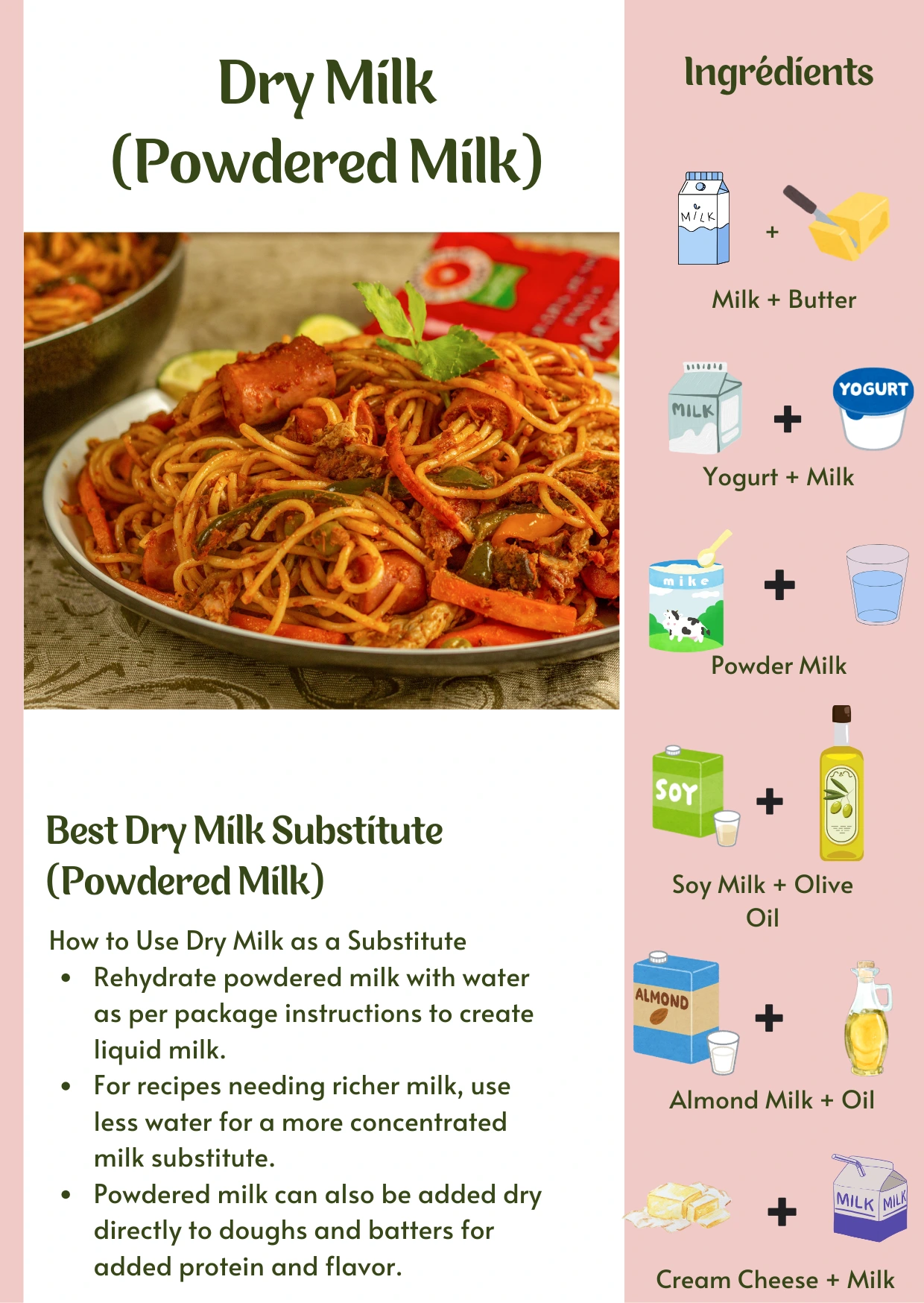
Dry milk (milk powder) is a versatile substitute often used when fresh milk is unavailable or for long-term storage.
How to Use Dry Milk as a Substitute
- Rehydrate powdered milk with water as per package instructions to create liquid milk.
- For recipes needing richer milk, use less water for a more concentrated milk substitute.
- Powdered milk can also be added dry directly to doughs and batters for added protein and flavor.
Pros and Cons
- Pros: Long shelf life, shelf-stable, easy to store.
- Cons: Sometimes lacks the fresh taste of liquid milk, slight powdery texture if not fully dissolved.
Best Uses
Ideal for baking, cooking, or making beverages when fresh milk isn’t available.
Mini Summary: Dry milk powder is a practical milk substitute with easy storage and use but requires proper reconstitution for best results.
Coconut Milk Substitute
Coconut milk is a popular dairy-free alternative, especially in curries, desserts, and creamy soups. Its rich, slightly sweet flavor and creamy texture make it ideal for vegan and lactose-intolerant diets.
Substitutes for Coconut Milk
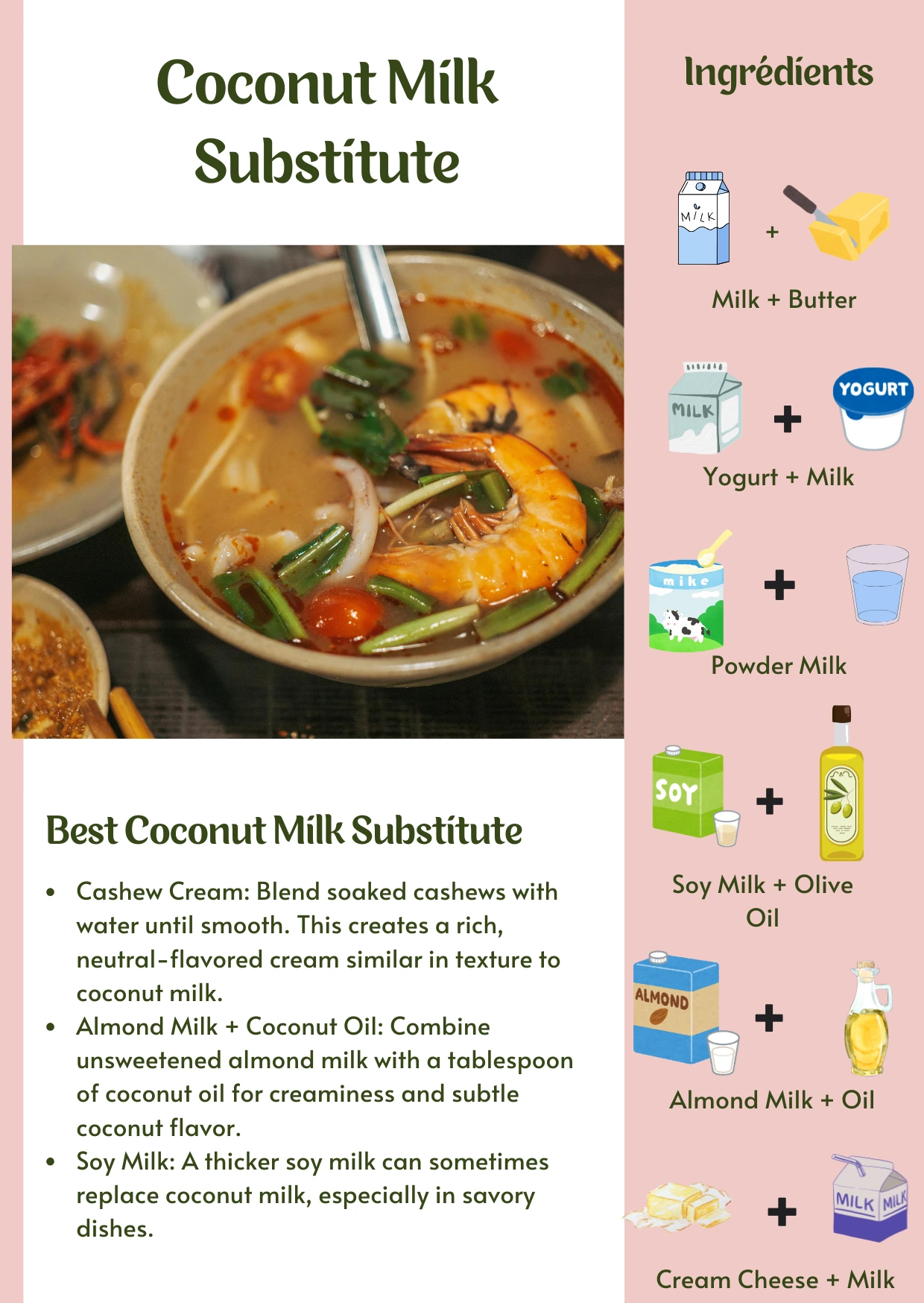
- Cashew Cream: Blend soaked cashews with water until smooth. This creates a rich, neutral-flavored cream similar in texture to coconut milk.
- Almond Milk + Coconut Oil: Combine unsweetened almond milk with a tablespoon of coconut oil for creaminess and subtle coconut flavor.
- Soy Milk: A thicker soy milk can sometimes replace coconut milk, especially in savory dishes.
Usage Notes
- Adjust quantities depending on desired thickness.
- Cashew cream is best for thick sauces and desserts.
- Almond milk blends work well in lighter curries and soups.
Mini Summary: Cashew cream and almond milk with coconut oil are excellent dairy-free coconut milk substitutes that provide similar creaminess and mild flavor.
Condensed Milk Substitute
Sweetened condensed milk is thick, sweet, and used mainly in desserts like pies and fudge.
Substitutes for Condensed Milk
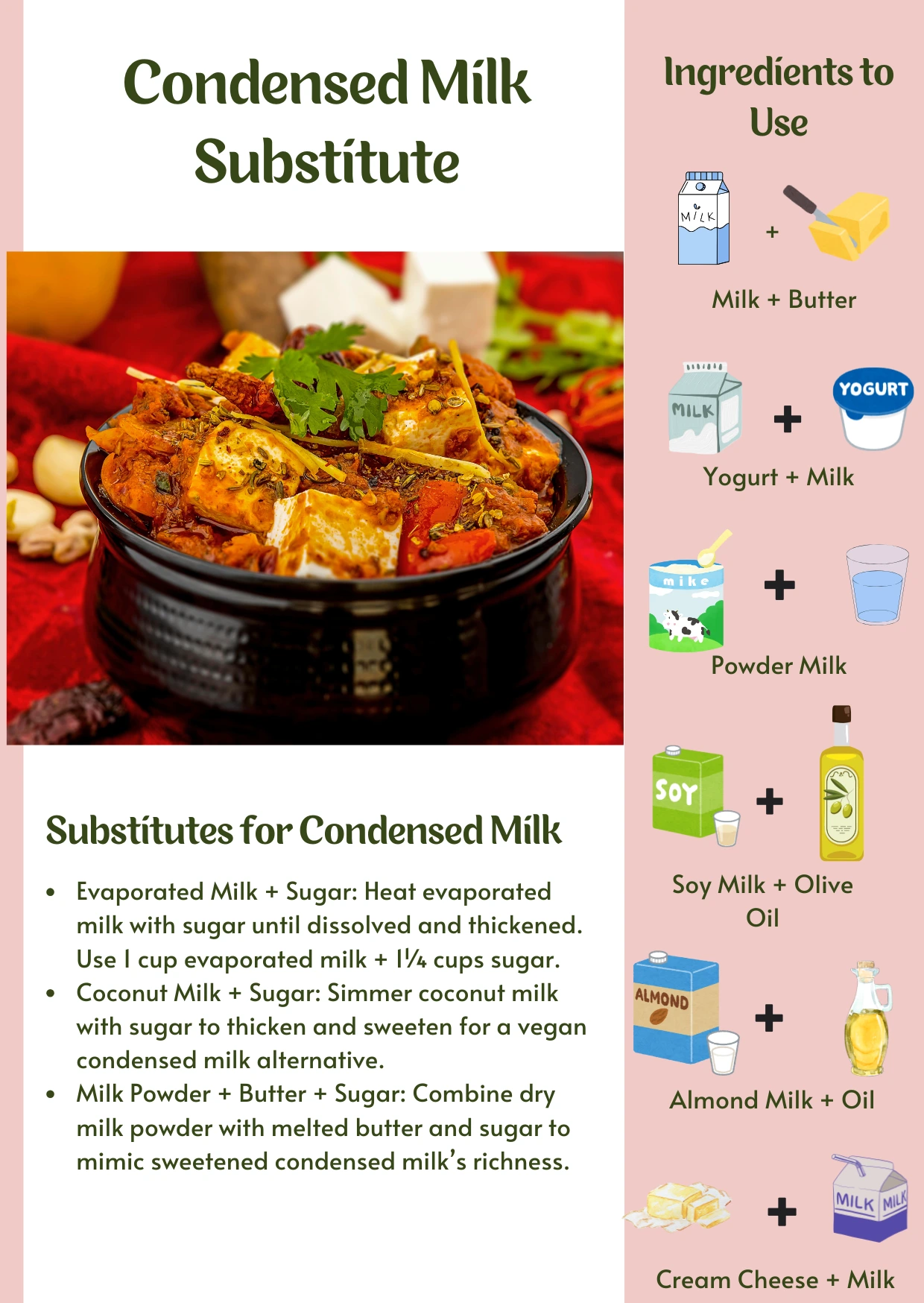
- Evaporated Milk + Sugar: Heat evaporated milk with sugar until dissolved and thickened. Use 1 cup evaporated milk + 1¼ cups sugar.
- Coconut Milk + Sugar: Simmer coconut milk with sugar to thicken and sweeten for a vegan condensed milk alternative.
- Milk Powder + Butter + Sugar: Combine dry milk powder with melted butter and sugar to mimic sweetened condensed milk’s richness.
Best Uses
Great for baking, dessert sauces, and sweet fillings.
Mini Summary: Simmered evaporated milk with sugar or coconut milk and sugar are perfect sweetened condensed milk substitutes for rich desserts.
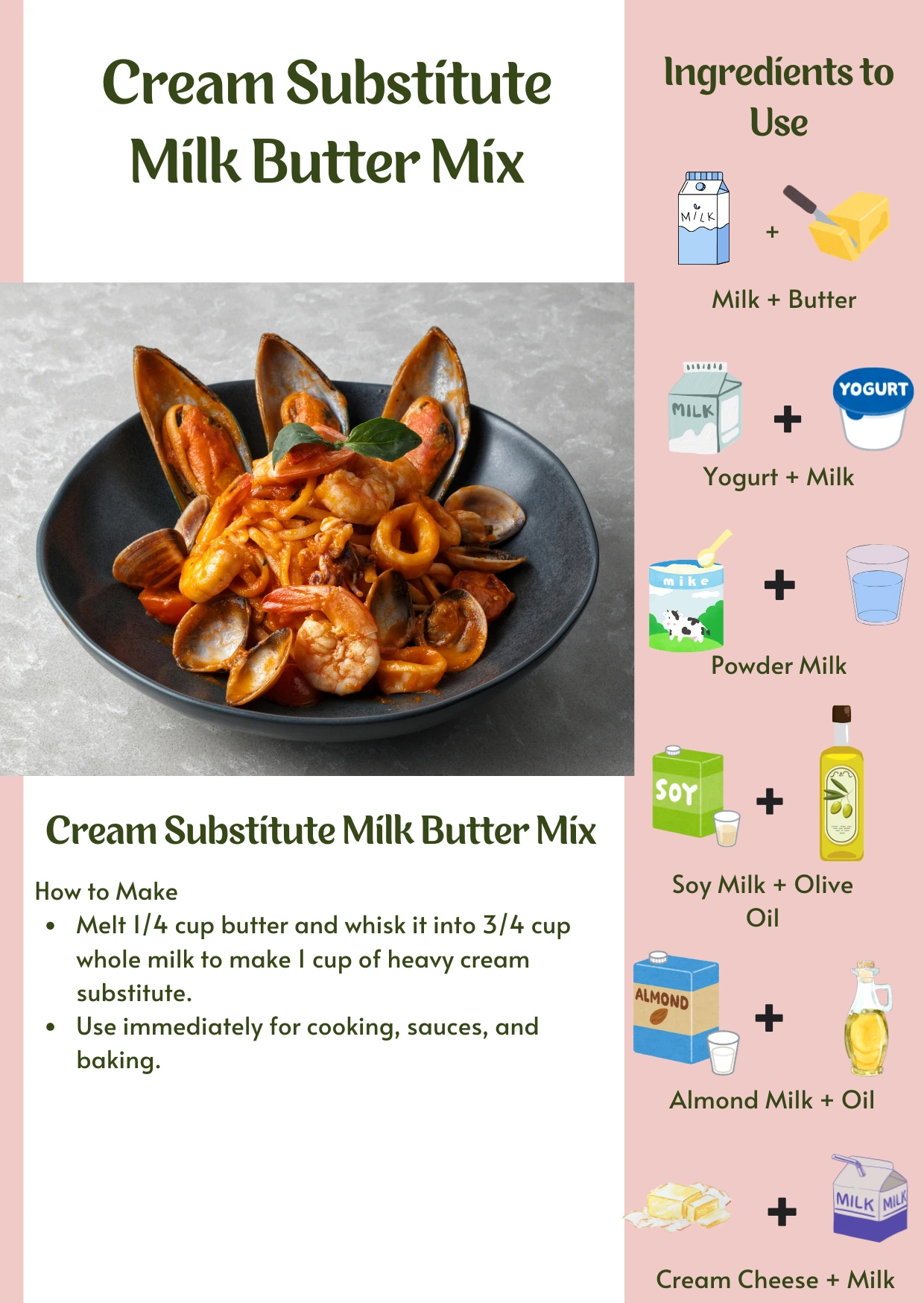
Cream Substitute Milk Butter Mix
When recipes call for heavy cream or a creamy milk substitute, a combination of milk and butter can work wonders.
How to Make
- Melt 1/4 cup butter and whisk it into 3/4 cup whole milk to make 1 cup of heavy cream substitute.
- Use immediately for cooking, sauces, and baking.
Why It Works
Butter adds fat and richness missing in milk alone, making the mixture mimic creaminess closely.
When to Use
Ideal in baking, pasta sauces, and creamy soups when you lack cream.
Mini Summary: Milk and butter combined form a rich cream substitute perfect for recipes needing fat and smooth texture.
Sweetened Condensed Milk Substitute
Sweetened condensed milk is a staple in many sweets and no-bake desserts.
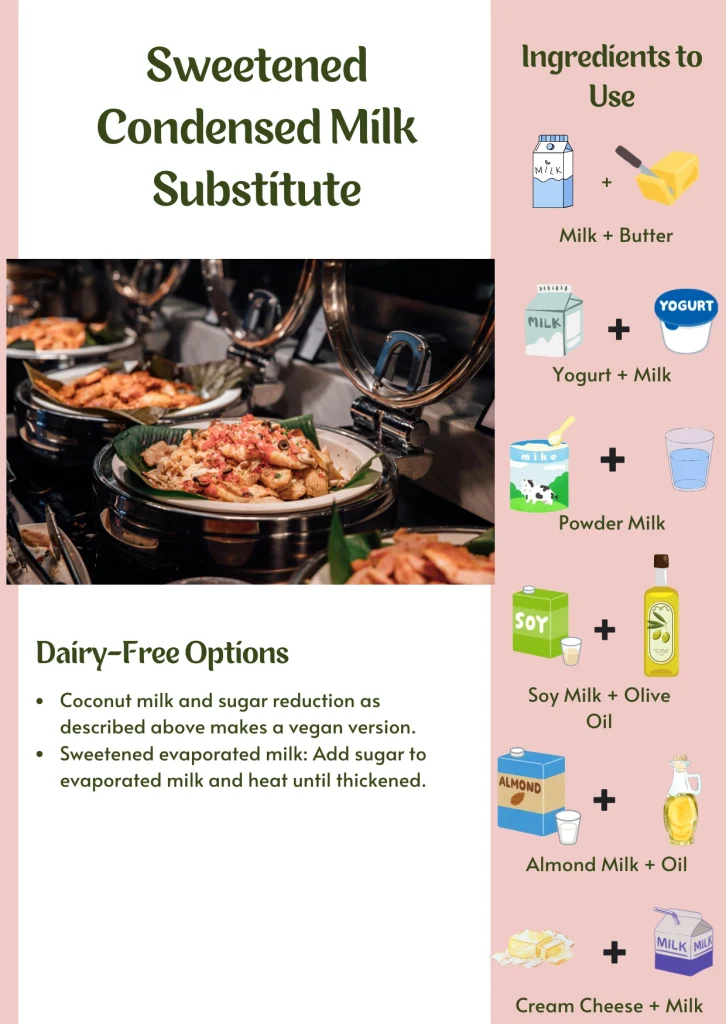
Dairy-Free Options
- Coconut milk and sugar reduction as described above makes a vegan version.
- Sweetened evaporated milk: Add sugar to evaporated milk and heat until thickened.
Ratios and Tips
- Keep sugar levels consistent with original recipes.
- Adjust cooking times when thickening substitutes.
Mini Summary: Sweetened condensed milk substitutes often involve thickened milk or coconut milk sweetened and reduced to achieve the right consistency.
Can You Substitute Heavy Cream for Milk?
Many wonder if heavy cream can replace milk in recipes.
What to Know
- Heavy cream is much richer and thicker than milk. Using it directly can alter texture and flavor.
- Dilute heavy cream with water (half cream, half water) to mimic milk’s consistency.
Usage Tips
- Use diluted heavy cream for baking and cooking in a 1:1 ratio to milk.
- Avoid in recipes where low fat is needed.
Mini Summary: Heavy cream can substitute milk when diluted properly, adding richness without overwhelming fat.

Milk Substitute for Baking
Choosing the right milk substitute in baking is essential for texture and flavor.
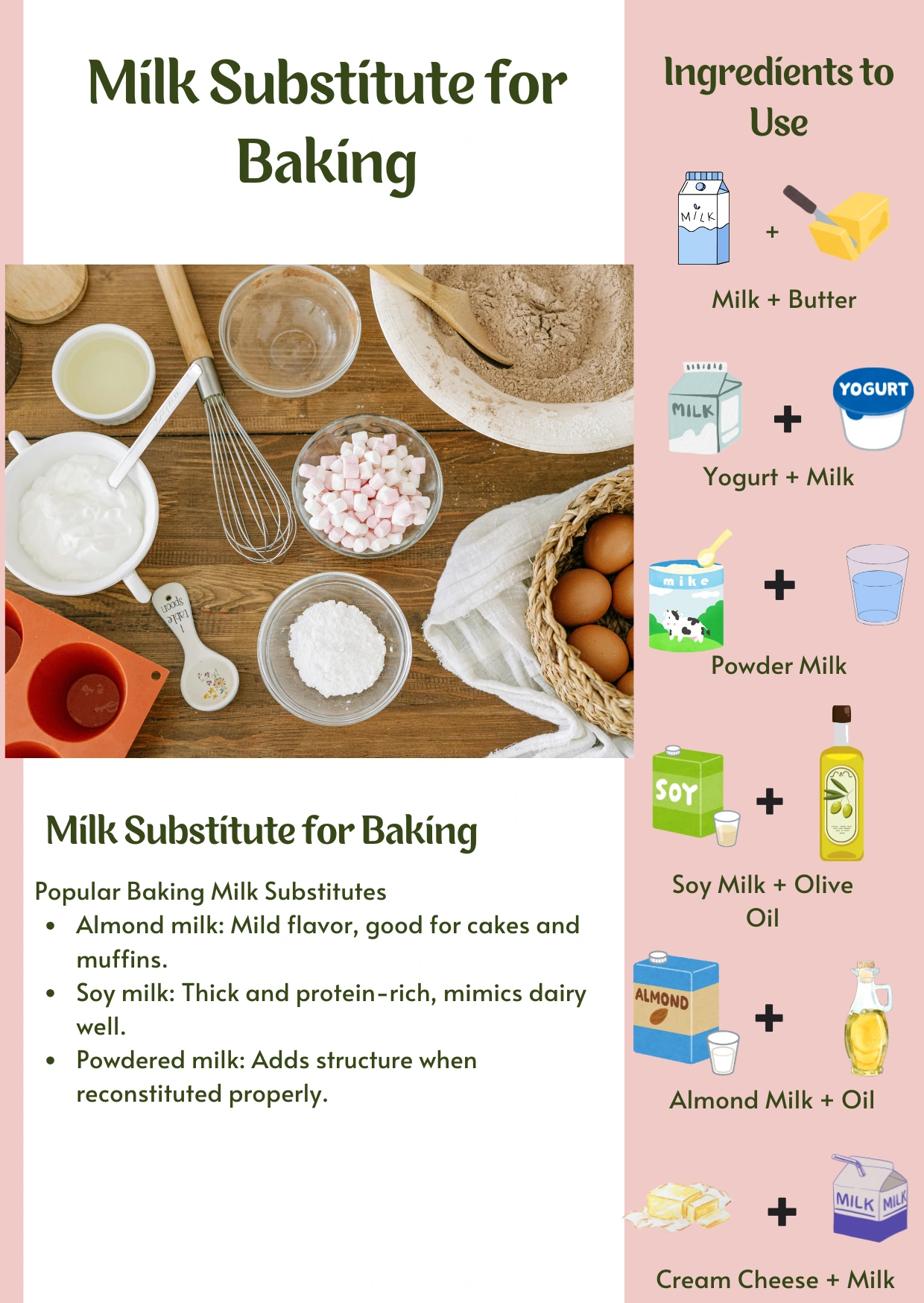
Popular Baking Milk Substitutes
- Almond milk: Mild flavor, good for cakes and muffins.
- Soy milk: Thick and protein-rich, mimics dairy well.
- Powdered milk: Adds structure when reconstituted properly.
Tips for Baking
- Consider the flavor of the substitute (e.g., almond milk adds nuttiness).
- Adjust liquid ratios when substituting concentrated milk products.
Mini Summary: Plant-based milks and powdered milk provide versatile baking substitutes, with attention to flavor and moisture adjustments.
Substitute for Milk in Mac and Cheese
Mac and cheese requires creamy, rich milk.
Best Substitutes
- Evaporated milk: Thick and creamy, perfect for sauces.
- Half and half: Rich and smooth, ideal for cheese sauces.
- Cream and water mix: Mimics milk’s fat and liquidity.
Tips
- Avoid watery substitutes that thin the sauce.
- Adjust cheese quantities for richness.
Mini Summary: Thick dairy substitutes like evaporated milk or half and half work best for creamy mac and cheese.

Dairy-Free Milk Substitutes
For lactose intolerance and vegan diets, dairy-free milk substitutes are essential.
Common Options
- Almond milk
- Soy milk
- Oat milk
- Rice milk
- Coconut milk
Benefits and Limitations
- Lower in fat and calories than dairy milk.
- Flavor varies, may affect recipe taste.
- Some have additives that affect texture.
Mini Summary: Choose dairy-free milks based on recipe needs and flavor profiles to achieve the best results.

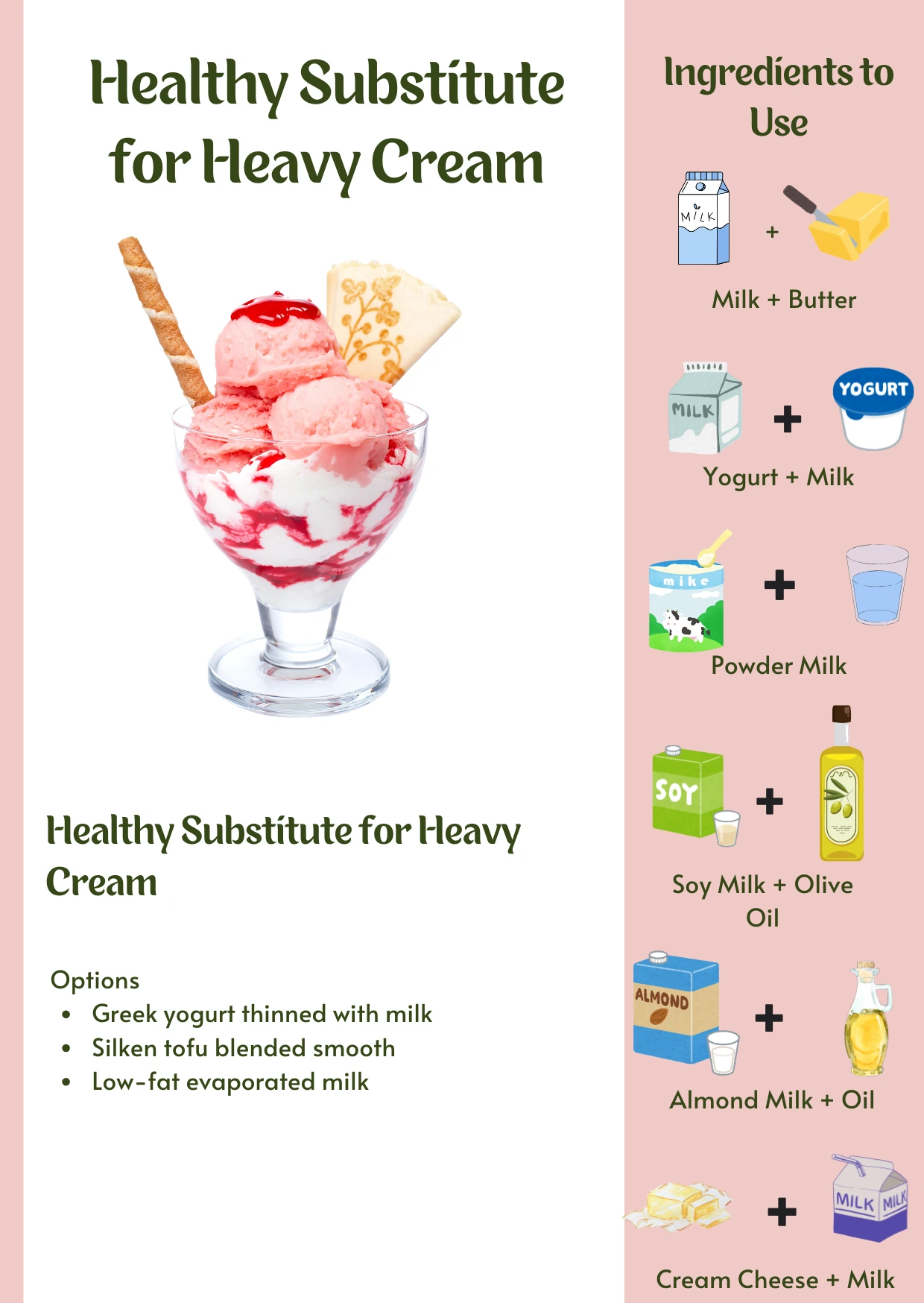
Healthy Substitute for Heavy Cream
For lower calorie and fat options, consider these substitutes.
Options
- Greek yogurt thinned with milk
- Silken tofu blended smooth
- Low-fat evaporated milk
When to Use
Best in soups, sauces, and some baking where richness is desired but calories must be controlled.
Mini Summary: Healthy heavy cream substitutes balance creaminess with fewer calories, perfect for health-conscious cooking.
Tips for Successfully Substituting Milk
- Always consider recipe type: baking vs cooking.
- Adjust liquid amounts when using concentrated or diluted substitutes.
- Taste test and tweak seasoning.
- Store homemade substitutes properly for freshness.
FAQ Section
Can you substitute heavy cream for milk?
Yes, but dilute heavy cream with water to avoid overwhelming richness.
What can I use instead of heavy cream in sauces?
Milk and butter mix, evaporated milk, or coconut cream are good choices.
How do I substitute evaporated milk?
Milk and butter or powdered milk mixed with less water can replace evaporated milk.
Is coconut milk a good milk substitute?
Yes, especially in curries and desserts, but it adds a distinct flavor.
Can I substitute dry milk for fresh milk?
Yes, when rehydrated properly, dry milk works well in most recipes.
Conclusion
Milk substitutes offer a world of possibilities to keep your cooking and baking on track, whether due to dietary restrictions or simply running out of milk. From classic milk and butter blends to rich coconut milk and versatile powdered milk, each substitute brings unique benefits. Experiment with these options to find your favorite — and never let missing milk hold you back in the kitchen!

Hi, I’m Katty, and I love helping home cooks find easy, tested ingredient replacements that actually work. All substitutes on this site are based on real kitchen experience and food science — so you can cook confidently every time!