Evaporated Milk Substitute: 10 Best Alternatives & Exact Ratios
Evaporated milk is a popular pantry staple, prized for its creamy texture and concentrated flavor. But what happens when you’re out of evaporated milk or need a dairy-free or healthier option? Whether for cooking, baking, or coffee, knowing the best evaporated milk substitutes can save your recipe from disaster and keep your meals delicious.

Based on extensive experience helping food lovers find the perfect ingredient swaps, this comprehensive guide explores the top substitutes for evaporated milk, how to use them, and which works best for your specific dish. We’ll cover dairy, non-dairy, healthy, and convenient options — all with precise ratios, pros and cons, and practical tips.
Here are our tested alternatives for heavy cream and buttermilk.
What Is Evaporated Milk & Why Use It?
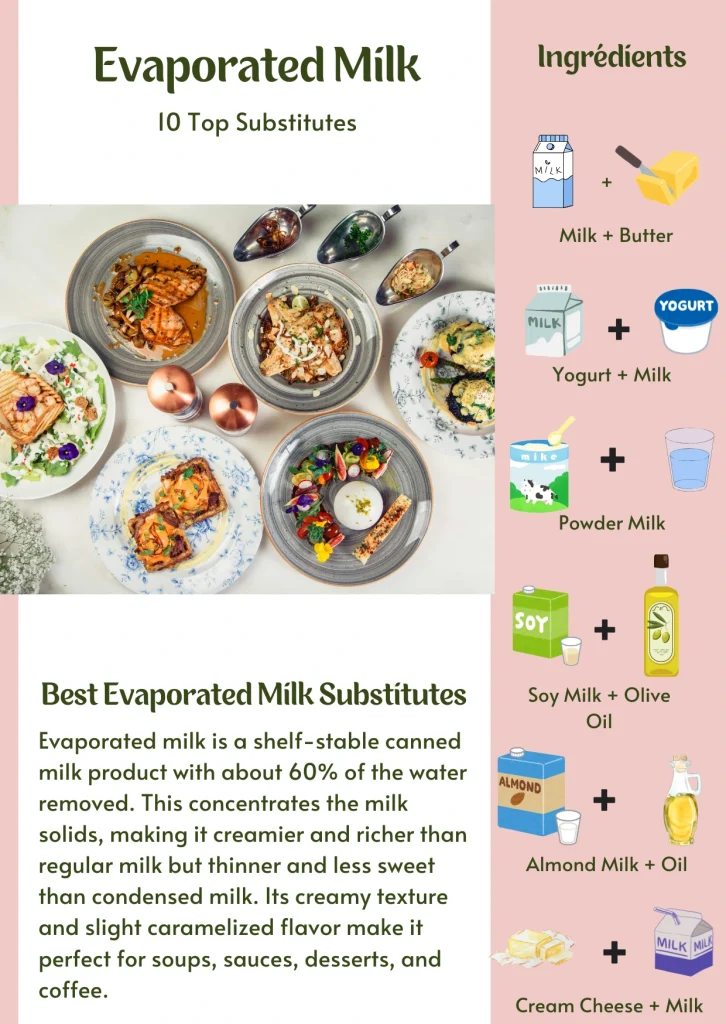
Evaporated milk is a shelf-stable canned milk product with about 60% of the water removed. This concentrates the milk solids, making it creamier and richer than regular milk but thinner and less sweet than condensed milk. Its creamy texture and slight caramelized flavor make it perfect for soups, sauces, desserts, and coffee.
Key qualities of evaporated milk:
But sometimes you don’t have evaporated milk on hand or need a substitute due to dietary restrictions, taste preferences, or convenience.
Why Substitute Evaporated Milk?
Here are some common reasons:
Each substitute affects texture, richness, and taste differently — so choosing the right one for your recipe is key.
How to Substitute Evaporated Milk: The Basics
Because evaporated milk is concentrated, most substitutes require some adjustment to mimic its creamy texture and richness.
Top 10 Evaporated Milk Substitutes
| Substitute | Best For | Ratio to Evaporated Milk | Notes & Tips |
|---|---|---|---|
| Homemade Evaporated Milk (Simmered Milk) | All uses (cooking & baking) | 1 cup whole milk reduced to 2/3 cup | Simple, fresh taste, easy to make at home |
| Milk + Butter | Baking, sauces | 1 cup milk + 2 tbsp melted butter | Adds fat to mimic creaminess |
| Half-and-Half | Coffee, sauces | 1:1 | Slightly richer, thinner than evaporated milk |
| Coconut Milk | Dairy-free, vegan dishes | 1:1 | Creamy, slightly sweet, great for curries & desserts |
| Condensed Milk (Unsweetened) | Baking, desserts | 1:1 (adjust sweetness) | Thicker and sweeter—reduce added sugar |
| Dry Milk Powder | Baking, long-term storage | Reconstitute with less water | Convenient pantry staple |
| Greek Yogurt + Milk | Baking, sauces | ½ cup yogurt + ½ cup milk | Creamy with a slight tang |
| Soy Milk + Olive Oil | Dairy-free cooking | 1 cup soy milk + 1 tbsp oil | Adds fat and smooth texture |
| Almond Milk + Oil | Light, dairy-free dishes | 1 cup almond milk + 1 tbsp oil | Lighter and less creamy |
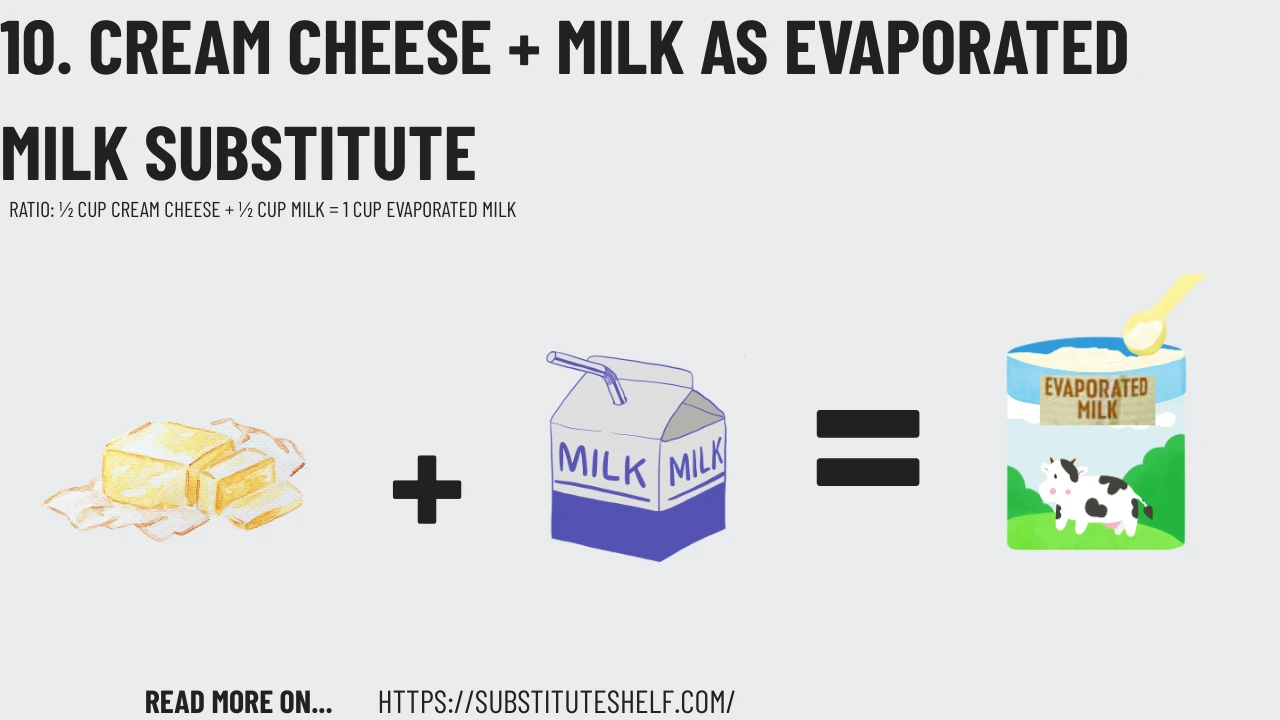
| Cream Cheese + Milk | Baking, sauces | ½ cup cream cheese + ½ cup milk | Very rich, noticeably changes texture |
Detailed Substitute Breakdown
1. Homemade Evaporated Milk (Simmered Milk)
The easiest and most authentic substitute is to simmer regular whole milk until about 60% of the water evaporates. Use low heat and stir often to prevent scorching. This thickens the milk and concentrates the flavor.
Pro Tip: Use whole milk for best richness. Low-fat milk won’t thicken as well.

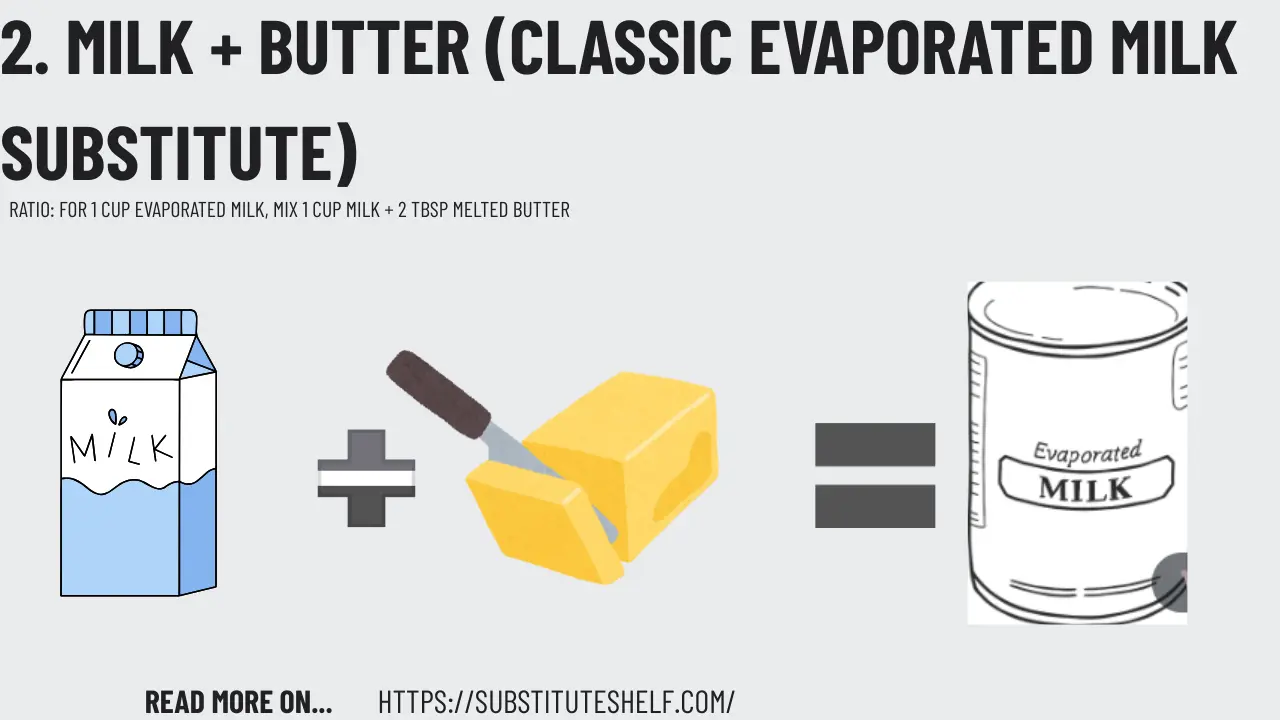
2. Milk + Butter (Classic Evaporated Milk Substitute)
Mixing melted butter into milk helps recreate evaporated milk’s fat content and creamy texture. It’s perfect for baking and savory recipes where richness is key.
3. Half-and-Half | Evaporated Milk Substitute
Half-and-half is a blend of milk and cream and can replace evaporated milk cup-for-cup in most recipes. It’s richer but less concentrated.
4. Coconut Milk (Dairy-Free Evaporated Milk Substitute)
Full-fat canned coconut milk is naturally creamy and rich, making it a popular vegan substitute for evaporated milk.
5. Condensed Milk (Unsweetened Evaporated Milk Substitute)
Evaporated milk and sweetened condensed milk differ mainly in sugar content. Using sweetened condensed milk requires reducing added sugar.
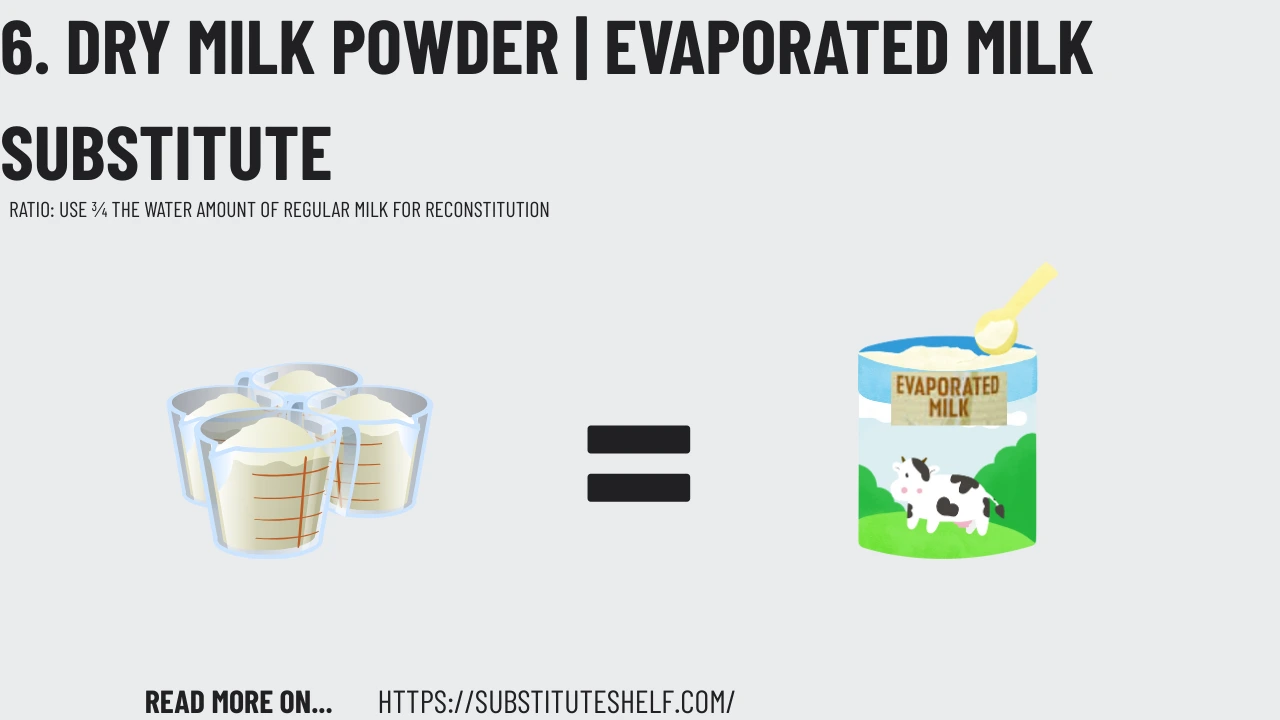
6. Dry Milk Powder | Evaporated Milk Substitute
Reconstituted dry milk powder can work if prepared with less water to mimic evaporated milk’s concentrated texture.
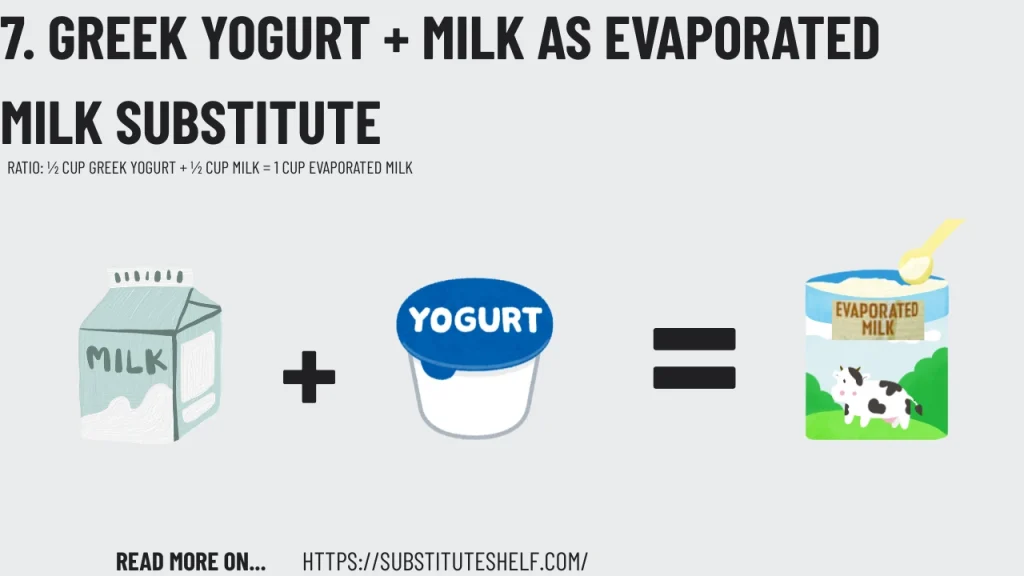
7. Greek Yogurt + Milk As Evaporated Milk Substitute
Mixing equal parts of Greek yogurt and milk gives creaminess and thickness similar to evaporated milk, with a slight tang.
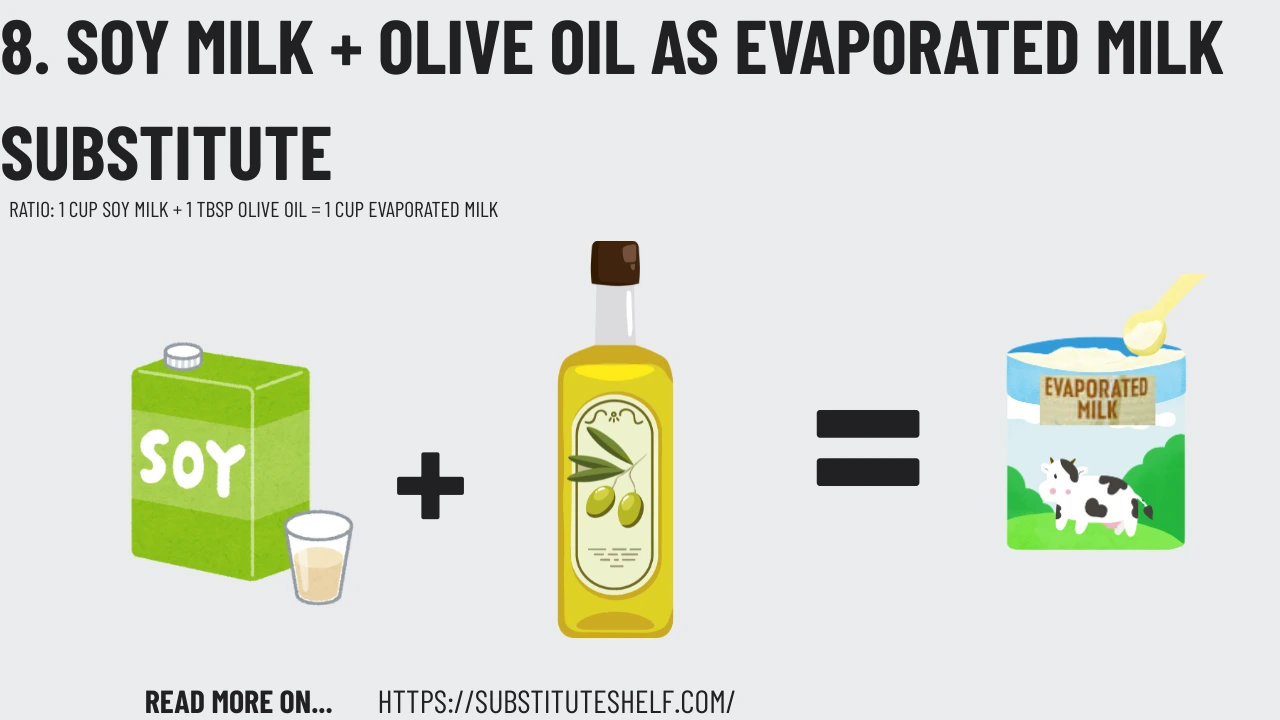
8. Soy Milk + Olive Oil As Evaporated Milk Substitute
A great non-dairy substitute for cooking, soy milk mixed with olive oil adds fat and creaminess.
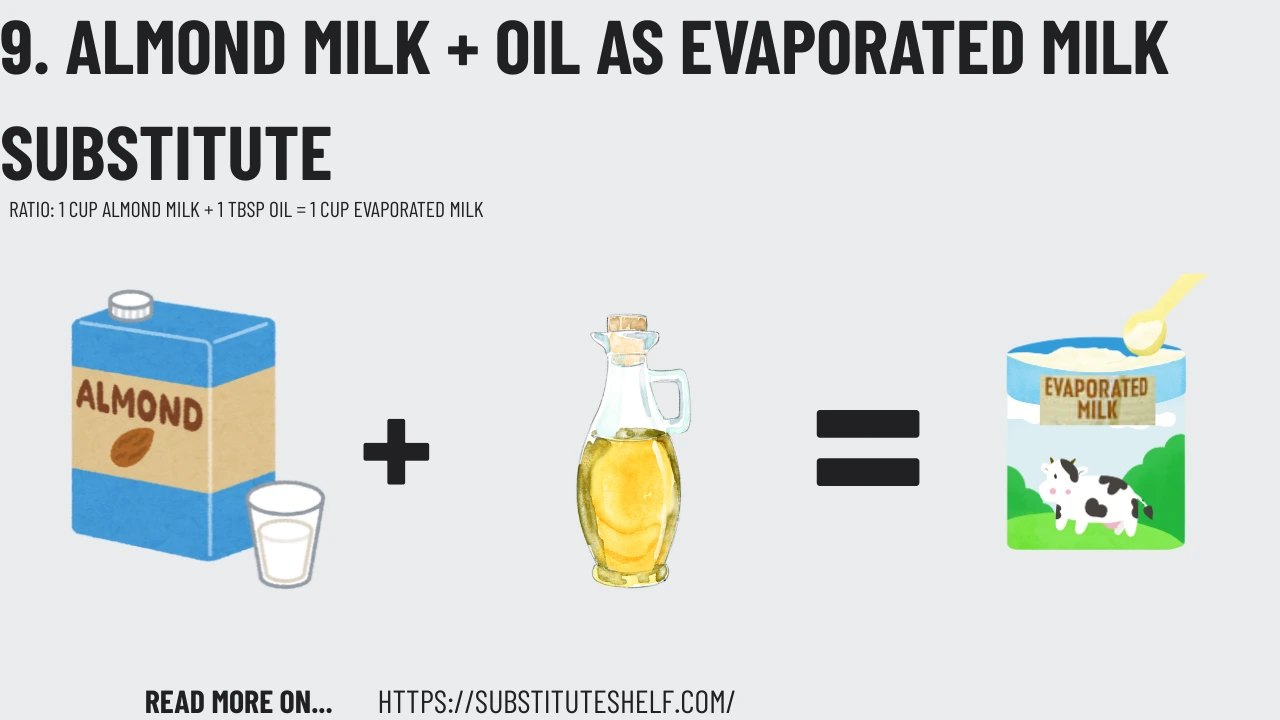
9. Almond Milk + Oil
Almond milk is lighter and less creamy, but adding oil can improve texture for some uses.
10. Cream Cheese + Milk
For thick, rich dishes, mixing softened cream cheese with milk can mimic evaporated milk’s richness.
When to Use Each Substitute: Recipe Guide
| Recipe Type | Best Substitute(s) | Notes |
|---|---|---|
| Soups & Sauces | Homemade evaporated milk, half-and-half, coconut milk | Creamy and rich texture is key |
| Baking (cakes, pies) | Milk + butter, homemade evaporated milk, Greek yogurt + milk | Maintains moisture and texture |
| Coffee & Beverages | Half-and-half, almond milk + oil | Creaminess without overpowering flavor |
| Vegan Recipes | Coconut milk, soy milk + olive oil | Dairy-free and creamy |
| Sweet Desserts | Condensed milk (adjust sugar), coconut milk | Adds sweetness and richness |
🔹 Evaporated Milk Substitute for Pumpkin Pie
Pumpkin pie is one of the most searched use cases for evaporated milk substitutes. Because the filling relies on creaminess rather than volume, several alternatives work exceptionally well.
Best Substitutes for Pumpkin Pie
Tip: Avoid low-fat milk substitutes for pumpkin pie—they produce a watery filling.
Quick Summary:
For pumpkin pie, half-and-half or full-fat coconut milk gives the best structure and flavor.
🔹 How to Make Evaporated Milk at Home (Step-by-Step)
Homemade evaporated milk is one of the most recommended solutions across top SERP results and videos.
Ingredients
- 1¾ to 2 cups whole milk (or 2%)
Instructions
Storage
- Refrigerate up to 3 days in an airtight container.
Quick Summary:
Simmering milk until reduced by about 40–50% creates a near-perfect evaporated milk substitute.
🔹 Dairy-Free & Vegan Evaporated Milk Substitutes
Non-dairy substitutes work well but may slightly change flavor and texture.
Best Vegan Options
How to Thicken Non-Dairy Milk
- Simmer to reduce by 30–40%
- Add 1–2 teaspoons cornstarch per cup
- Mix with dairy-free creamer if needed
Quick Summary:
For vegan recipes, reduced oat milk or full-fat coconut milk performs best.
🔹 Lactose-Free Evaporated Milk Substitutes
For lactose intolerance, traditional substitutes may cause discomfort.
Best Lactose-Free Options
Note: Lactose-free dairy behaves almost identically in baking.
Quick Summary:
Lactose-free dairy products are the safest 1:1 evaporated milk substitutes.
🔹 Evaporated Milk Substitute for Baking vs Cooking
The best substitute depends on how the milk is used.
For Baking (Pies, Custards, Desserts)
Best options:
For Cooking (Soups, Sauces, Queso)
Best options:
Quick Summary:
Baking needs richness and stability; cooking allows more flexibility.
🔹 Powdered Milk as an Evaporated Milk Substitute
Powdered milk is often overlooked but works well.
How to Use
- Reconstitute powdered milk using less water than directed
- Use ¾ cup water instead of 1 cup for thicker consistency
Best Uses
- Baking
- Sauces
- Casseroles
Quick Summary:
Powdered milk creates a shelf-stable, affordable evaporated milk alternative.
🔹 Flavor Differences & How to Adjust Them
Evaporated milk has a slightly caramelized flavor due to heating.
How to Mimic the Flavor
Quick Summary:
Small flavor adjustments can make substitutes nearly indistinguishable.
🔹 1 Can of Evaporated Milk Substitute (Exact Conversions)
Most recipes use a standard 12 oz (1½ cups) can.
Exact Replacements
Quick Summary:
Use equal volume replacements unless reducing milk manually.
🔹 Can You Turn Evaporated Milk Back Into Regular Milk?
Yes — evaporated milk can be reconstituted.
How to Reconstitute
- Mix 1 part evaporated milk + 1 part water
- Stir until fully combined
Best Uses
- Baking
- Cooking
- Sauces
Quick Summary:
Reconstituted evaporated milk closely resembles regular milk in recipes.
FAQ: Evaporated Milk Substitute
Q1: Can I substitute evaporated milk for regular milk?
A: Yes, but evaporated milk is thicker and richer. Use less or dilute with water for a closer match.
Q2: Can I use heavy cream instead of evaporated milk?
A: Heavy cream is richer and thicker, so dilute it with milk for a good substitute.
Q3: Is coconut milk a good substitute for evaporated milk?
A: Yes, especially for dairy-free and vegan recipes, but it has a coconut flavor.
Q4: Can I use sweetened condensed milk instead of evaporated milk?
A: You can, but reduce other sugars in the recipe as it’s much sweeter.
Q5: How do I make evaporated milk at home?
A: Simmer whole milk on low heat until it reduces by about 60%.
Q6: What can I use instead of evaporated milk?
Half-and-half, heavy cream, reduced milk, coconut milk, or oat milk.
Q7: How do you make evaporated milk from regular milk?
Simmer milk until reduced by about half.
Q8: What can I use instead of evaporated milk in pumpkin pie?
Half-and-half or full-fat coconut milk works best.
Q9: Is condensed milk the same as evaporated milk?
No. Condensed milk contains added sugar.
Q10: Can I use regular milk instead of evaporated milk?
Yes, but reduce it first for best results.
Final Tips for Success
- Always consider the flavor profile of your substitute—coconut and soy milks will add unique flavors.
- Adjust sugar content when using sweetened substitutes like condensed milk.
- For baking, substitutes with fat (milk + butter) provide the best texture.
- Non-dairy substitutes work best in savory dishes or where a slight flavor change is acceptable.
Internal Link Suggestions
- Heavy Cream Substitute
- Milk Substitute
- Condensed Milk Substitute
- Coconut Milk Substitute

Hi, I’m Katty, and I love helping home cooks find easy, tested ingredient replacements that actually work. All substitutes on this site are based on real kitchen experience and food science — so you can cook confidently every time!