
Sugar Substitutes: Best Natural, Healthy & Baking Alternatives (Complete Guide)
Sugar substitutes have become essential in modern cooking — not only for people watching calories, carbs, or blood sugar, but also for bakers who need the right texture and sweetness without traditional sugar.
Whether you want a healthy sugar replacement, a keto-approved sweetener, or a powdered sugar as alternative for a recipe, this detailed guide covers everything.
This is your all-in-one resource for understanding natural sweeteners, artificial sugar replacement, ratios, best uses, and how to substitute sugar in all types of cooking and baking.

Take a Look to our tested substitute which in includes Egg, Cornstarch and Mirin.
What Is a Sugar Substitute?
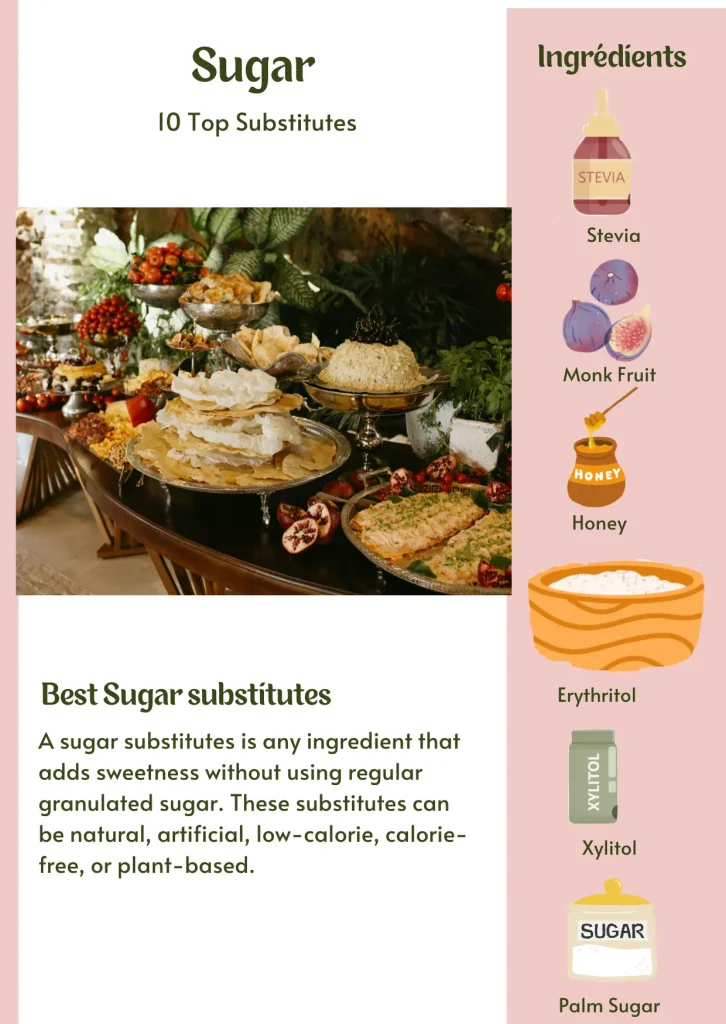
A sugar substitutes is any ingredient that adds sweetness without using regular granulated sugar. These substitutes can be natural, artificial, low-calorie, calorie-free, or plant-based.
People use sugar alternatives for:
- Cutting calories
- Managing diabetes
- Following a keto or low-carb diet
- Reducing refined sugar intake
- Alternative baking methods
- Avoiding sugar spikes
The most common categories include:
Types of Sugar Substitutes
Natural Sugar Substitutes
Natural sugar substitutes are derived from plants or natural sources and may contain calories, depending on the type.
Popular natural options include:
- Stevia (zero calories)
- Monk fruit extract (zero calories)
- Honey
- Maple syrup
- Coconut sugar
- Date sugar and fruit purées
While natural, some of these still behave like sugar in the body and should be used in moderation.
High-Intensity (Artificial) Sweeteners
High-intensity sweeteners are many times sweeter than sugar and are used in very small amounts.
Common examples include:
- Aspartame (Equal, NutraSweet)
- Sucralose (Splenda)
- Saccharin (Sweet’N Low)
- Acesulfame Potassium (Ace-K)
- Neotame and Advantame
These sweeteners contain little to no calories and generally do not raise blood sugar levels.

Sugar Alcohols
Sugar alcohols occur naturally in fruits and vegetables and are partially absorbed by the body.
Common sugar alcohols include:
- Erythritol
- Xylitol
- Sorbitol
- Maltitol
They provide fewer calories than sugar but may cause digestive discomfort when consumed in large amounts.
Reduced-Calorie Sweeteners
Natural options like agave or maple syrup.
These options have different levels of sweetness, textures, and effects on blood sugar — which makes choosing the best sugar replacement important depending on your recipe and goal.
Best Sugar Substitutes
Here are the top sugar Alternatives based on taste, health, sweetness, and versatility:
1. Stevia — Best natural, zero-calorie substitute
2. Monk Fruit — Best for diabetics & low-carb diets
3. Erythritol — Best for keto baking
4. Coconut Sugar — Best natural 1:1 replacement
5. Allulose — Best for caramelization
6. Honey — Best whole-food substitute
7. Xylitol — Popular diabetic-friendly sweetener
8. Sucralose — Best artificial sweetener for baking
These will be explained in detail below.
Natural Sugar Substitutes (Healthiest Options)
Natural sweeteners are the preferred option for most people looking for a healthy sugar Alternatives or a natural sugar replacement for daily use.
Stevia Sugar Substitutes
- 100–300× sweeter than sugar
- Zero calories
- Comes from stevia plant leaves
- Excellent diabetic-friendly option
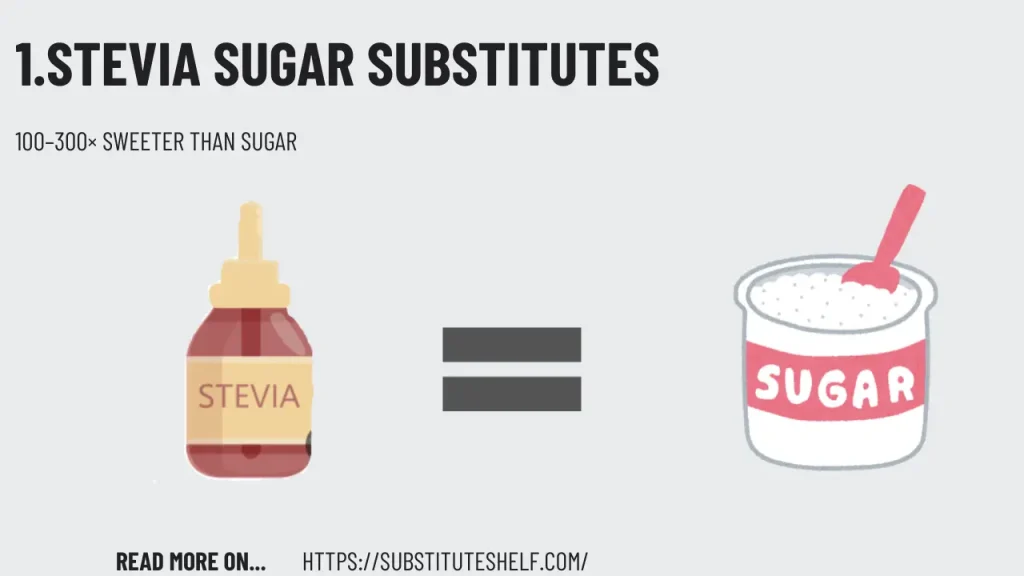
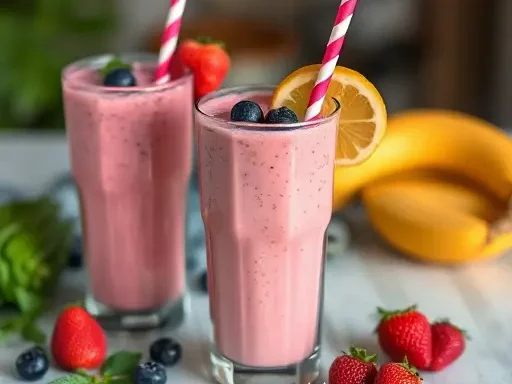
Best for: drinks, smoothies, coffee, cold recipes
Avoid in: recipes needing bulk like cookies (use blends instead)
Monk Fruit Sugar Alternative
- Zero calories
- No impact on blood sugar
- Sweeter than sugar (150–200×)
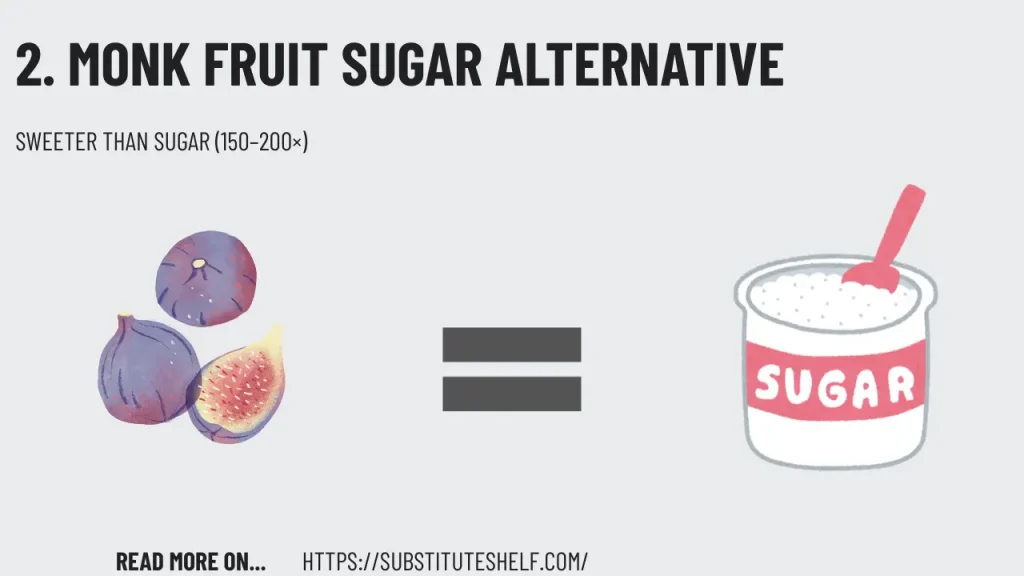
Best for: keto diets, diabetics, all baking
Notes: Very clean aftertaste compared to stevia.
Coconut Sugar as Substitute
- Made from coconut palm sap
- Low glycemic index
- 1:1 ratio with sugar
Best for: desserts, baking, everyday use
Notes: Mild caramel flavor.
Honey as a Sugar Substitutes
- Natural and nutrient-rich
- Sweeter than sugar, so use less
- Adds moisture to baked goods
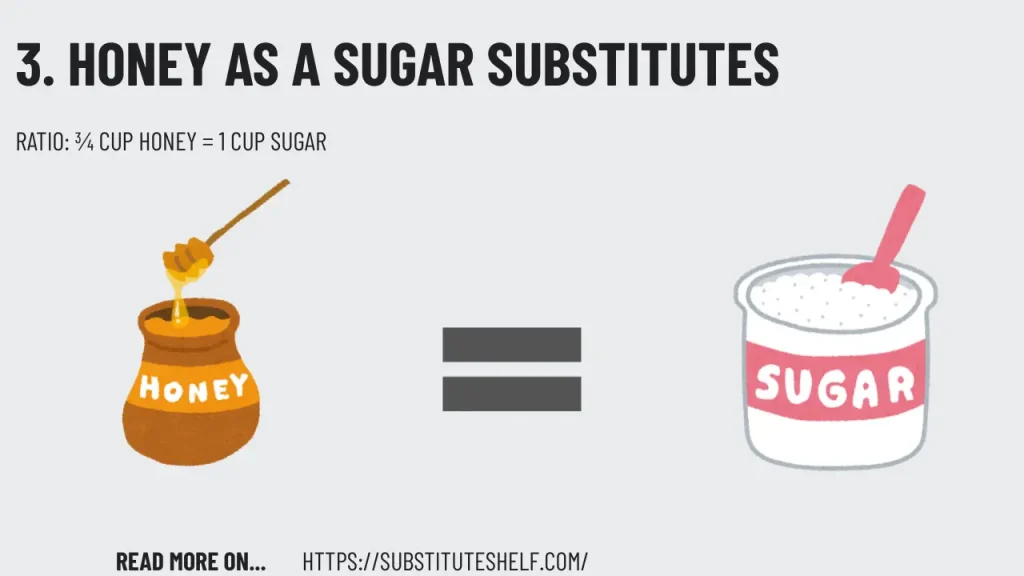
Best for: marinades, drinks, cakes, muffins
Ratio: ¾ cup honey = 1 cup sugar
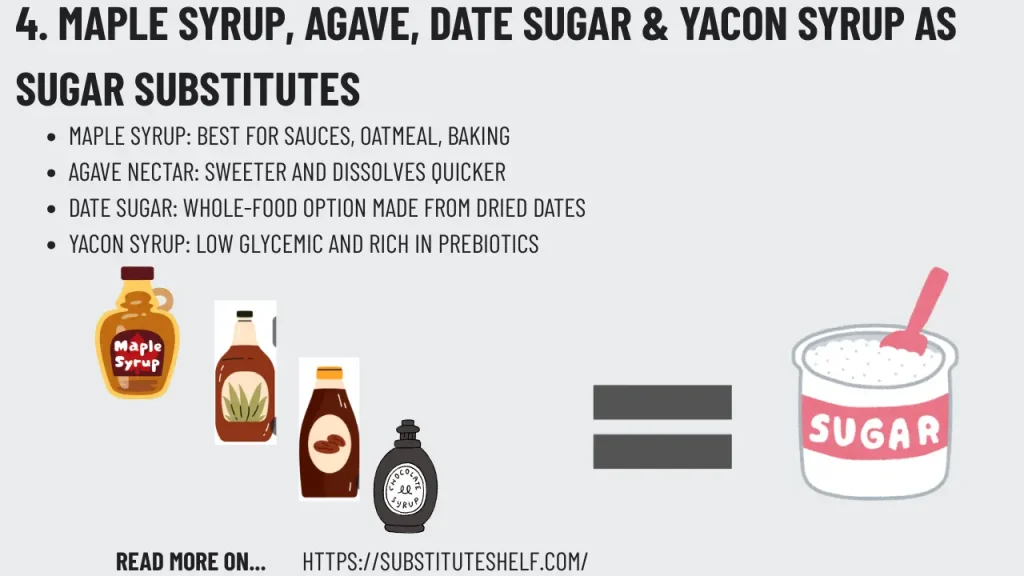
Maple Syrup, Agave, Date Sugar & Yacon Syrup
Each brings unique flavors and benefits.
- Maple syrup: best for sauces, oatmeal, baking
- Agave nectar: sweeter and dissolves quicker
- Date sugar: whole-food option made from dried dates
- Yacon syrup: low glycemic and rich in prebiotics
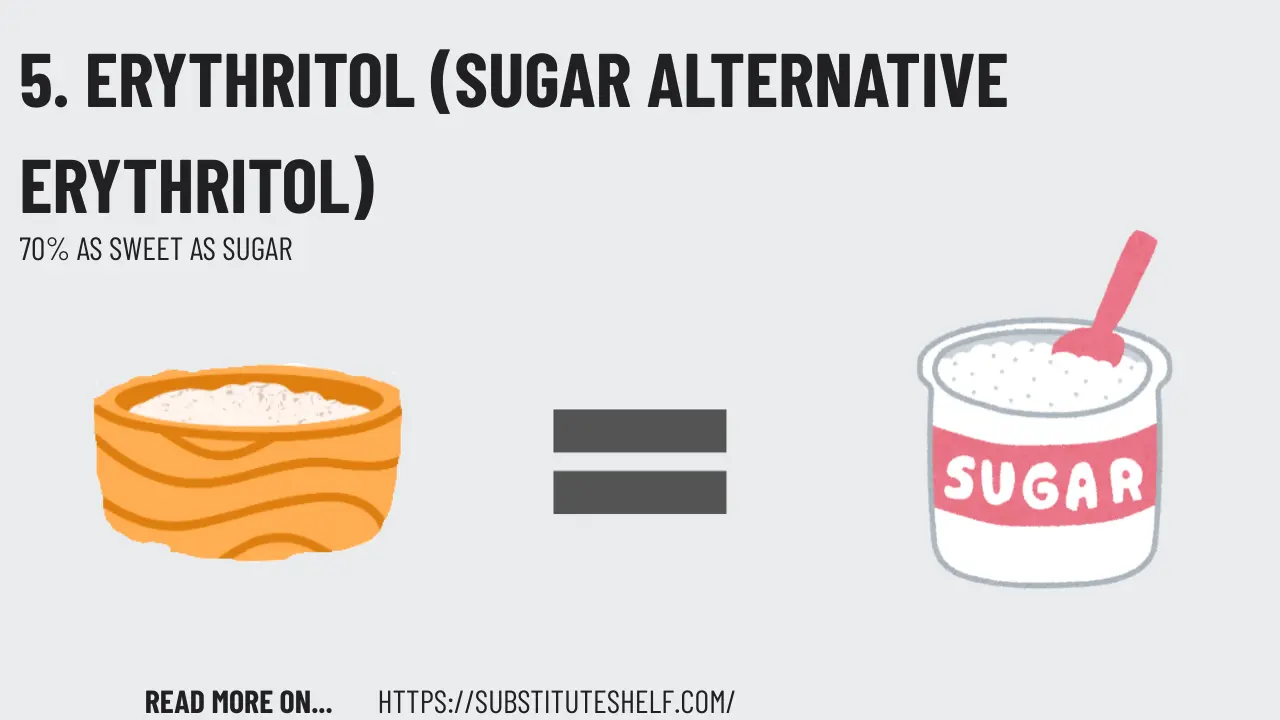
Erythritol (Sugar alternative Erythritol)
A zero-calorie sugar alcohol:
- 70% as sweet as sugar
- Doesn’t spike blood sugar
- Great for keto and diabetic diets
Best for: baking, frosting, cookies, keto sweets
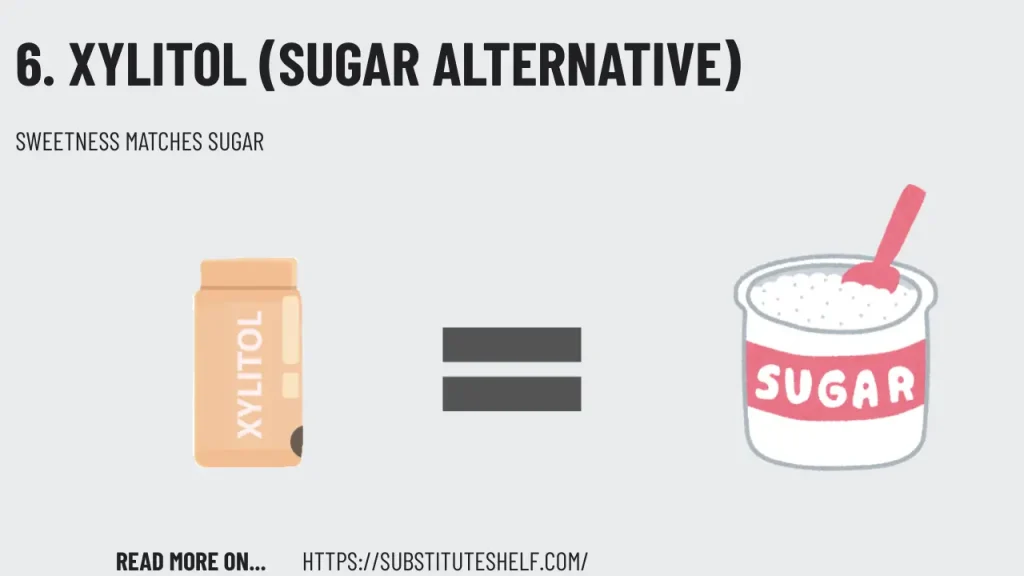
Xylitol
- Sweetness matches sugar
- Very low glycemic
- Good for diabetics
Warning: Toxic to pets.
Palm Sugar as Substitute
- Natural unrefined sweetener
- Great for Asian cooking
- Mild caramel taste
Best for: curries, sauces, beverages
Artificial Sugar as Substitutes (Low/Zero-Calorie Options)
These sweeteners are extremely sweet and used in very small amounts.
Equal Sugar Substitute
Contains aspartame, widely used in diet sodas and tabletop sweeteners.
Best for: drinks, cold recipes
Not ideal for: high-heat baking

Sucralose (Splenda)
- Very popular artificial sweetener
- Heat-stable → great for baking
- Zero calories
Saccharin
- Oldest artificial sweetener
- Very strong sweetness
- Used in small quantities
Aspartame
Common in sugar-free beverages.
Keto Sugar as Substitute (Low-Carb Options)
Perfect for people avoiding carbs.
Top Keto Sweeteners:
- Erythritol
- Stevia
- Monk fruit
- Allulose
- Xylitol
These do not raise blood sugar and are ideal for keto or low-carb diets.
Sugar Substitute for Baking (How to Replace Sugar in Recipes)
Substituting sugar in baking is tricky because sugar adds:
- Moisture
- Browning
- Texture
- Structure
Here’s how each substitute behaves.
Substituting Sweetener for Sugar in Baking
General rules:
- Liquid sweeteners: reduce liquid in recipe
- Zero-calorie sweeteners: add bulk using applesauce or yogurt
- Sugar alcohols: sometimes don’t caramelize
Can You Substitute Powdered Sugar for Granulated Sugar?
Sometimes — but not always.
- Powdered sugar dissolves faster
- It changes texture of cookies and cakes
- Not ideal 1:1 replacement
Can You Substitute Confectioners Sugar for Granulated Sugar?
Only if:
✓ used in small amounts
✗ Not good for creaming or cookies needing structure
Can You Substitute Brown Sugar for White Sugar?
- Yes, but it adds moisture & molasses flavor
- Use only when recipe can handle it
- Not suitable for all desserts
Demerara Sugar as Substitute
Best substitutes:
- Turbinado sugar
- Coconut sugar
- Light brown sugar
Turbinado Sugar Substitute
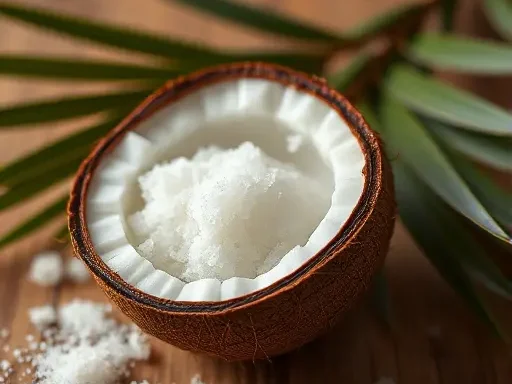
Use:
- Demerara sugar
- Coconut sugar
- Raw sugar
Caster Sugar Substitute
- Granulated sugar (processed to finer texture)
- Powdered sugar (for some recipes)
- Superfine sugar
Granulated Sugar Substitute
Best alternatives:
- Coconut sugar
- Maple syrup
- Honey
- Artificial sweeteners
- Allulose
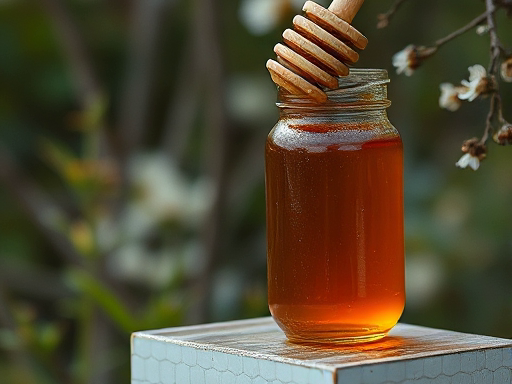
TABLE — Sugar Substitutes, Ratios & Best Uses
| Sugar Substitute | Type | Ratio to Sugar | Calories | Best For | Notes |
|---|---|---|---|---|---|
| Stevia | Natural | 1 tsp = 1 cup sugar (liquid) | 0 | Drinks, cold recipes | Bitter if overused |
| Monk Fruit | Natural | 1:1 (blended) | 0 | All baking | Clean taste |
| Erythritol | Sugar alcohol | 1:1 | 0 | Keto baking | Cooling effect |
| Coconut Sugar | Natural | 1:1 | 15/cup | Baking, desserts | Caramel flavor |
| Honey | Natural liquid | ¾ cup = 1 cup sugar | 64 Tbsp | Muffins, cakes | Adds moisture |
| Maple Syrup | Natural | ¾ cup = 1 cup sugar | Moderate | Sauces, desserts | Strong flavor |
| Xylitol | Sugar alcohol | 1:1 | Low | Baking | Toxic to dogs |
| Sucralose | Artificial | 1:1 (Splenda) | 0 | Baking | Highly sweet |
| Allulose | Natural | 1.3:1 | Low | Candies, caramel | Browning agent |
Powdered Sugar Substitute (In Baking & Frosting)
Best powdered sugar substitutes:
- DIY powdered sugar
- Granulated sugar blended with cornstarch
- Coconut sugar powder
- Erythritol powdered (keto)
- Confectioners sugar substitute products
How to Make DIY Powdered Sugar
Blend:
- 1 cup granulated sugar
- 1 tbsp cornstarch
Blend until powdery.
Confectioners Sugar Substitute
Options:
- Powdered erythritol
- Homemade powdered sugar
- Caster sugar (for some recipes)
- Blended raw sugar
Caster Sugar Substitutes
- Processed granulated sugar
- Superfine sugar
- Powdered sugar (in select recipes)
Granulated Sugar Substitutes
- Honey
- Maple syrup
- Coconut sugar
- Artificial sweeteners
- Monk fruit blends
Are Sugar Substitutes Safe?
Not necessarily.
It depends on the type.
Safe in moderation:
- Stevia
- Monk fruit
- Erythritol
- Xylitol
Use carefully:
- Aspartame
- Sucralose
- Saccharin
Best Sugar Substitutes for Diabetics
Top recommended:
- Stevia
- Monk fruit
- Erythritol
- Xylitol (in moderation)
These cause almost zero impact on blood glucose.
Why People Use Sugar Substitutes
Sugar substitutes are used for several practical and health-related reasons:
- Calorie reduction for weight management
- Blood sugar control for diabetes and insulin resistance
- Dental health, as some sweeteners do not promote tooth decay
- Diet compatibility for keto, low-carb, or plant-based lifestyles
Best Sugar Substitutes by Purpose
| Purpose | Best Sugar Substitute |
|---|---|
| Best for baking | Sucralose, erythritol blends |
| Best for coffee & tea | Stevia, monk fruit |
| Best for diabetics | Stevia, monk fruit, erythritol |
| Best keto option | Monk fruit + erythritol |
| Closest taste to sugar | Allulose, erythritol blends |
Is There a Healthiest Sugar Substitute?
The healthiest sugar substitute depends on individual needs.
- Stevia and monk fruit are often considered the healthiest because they are plant-based, calorie-free, and do not raise blood sugar.
- Erythritol is well-tolerated by many and has minimal impact on insulin.
- Honey and maple syrup offer trace nutrients but still raise blood sugar and should be limited.
Moderation is key, regardless of the type used.
Using Sugar Substitutes in Baking
Not all sugar substitutes behave the same in baking.
- Some lack bulk and require recipe adjustments
- Heat stability varies between sweeteners
- Texture and browning may be affected
Blended sweeteners designed specifically for baking usually provide the best results.
FAQ
1. What is the healthiest sugar substitute?
Stevia, monk fruit, and erythritol.
2. Can I substitute brown sugar for white sugar?
Yes, but it changes texture.
3. Can you substitute powdered sugar for granulated sugar?
Only in limited recipes.
4. What is the best sugar substitute?
Stevia or monk fruit for general use; erythritol for baking.
5. Are sugar substitutes bad for you?
No — natural substitutes are considered safe.
6. What Is the Best Substitute for Sugar?
The best substitute depends on usage. For baking, erythritol blends work best. For drinks, stevia or monk fruit are popular choices.
7. What Is the Healthiest Artificial Sweetener?
Stevia and monk fruit are often considered healthier options due to their natural origin and zero glycemic impact.
8. Do Sugar Substitutes Have Calories?
Some sugar substitutes are calorie-free, while others contain fewer calories than sugar. Always check product labels.
9. Are Sugar Substitutes Better Than Sugar?
Sugar substitutes can reduce calorie intake and blood sugar spikes but should still be consumed in moderation as part of a balanced diet.
Final Thoughts on Sugar Substitutes
Sugar substitutes offer flexibility for reducing sugar intake while maintaining sweetness in foods and beverages. Choosing the right substitute depends on health goals, taste preference, and how it will be used in baking, cooking, or avoiding carbs, there’s a perfect option — from stevia and monk fruit to erythritol, honey, coconut sugar, and allulose.
Use the ratios, tables, and tips in this guide to confidently replace sugar in any recipe.

Hi, I’m Katty, and I love helping home cooks find easy, tested ingredient replacements that actually work. All substitutes on this site are based on real kitchen experience and food science — so you can cook confidently every time!


