Meal Replacement Shakes : What It Is, Benefits, and How to Use It Safely
A food substitute shake—often called a meal replacement shake—is a nutritionally balanced drink designed to replace a full meal. These shakes typically contain protein, carbohydrates, healthy fats, fiber, vitamins, and minerals, making them a convenient option for busy schedules, weight management, or nutritional support.

Here are our best tested and tasted Gruyère Cheese Substitute and Crème Fraîche Substitute.
But are foods substitute shake actually healthy? And are protein shakes a good substitute for food?
Let’s break it all down.
What Is a Food Substitute Shake?
A food substitute shake is a complete or near-complete meal in liquid form. Unlike standard protein shakes, which mainly provide protein, food substitute shakes are formulated to deliver:
- Protein for satiety and muscle support
- Carbohydrates for energy
- Healthy fats for hormone and brain function
- Fiber for digestion
- Essential vitamins and minerals
Most shakes range between 200–400 calories per serving, depending on brand and purpose.
They’re commonly used for:
- Weight loss
- Weight maintenance
- Busy mornings or lunches
- Medical or elderly nutrition support

Are Protein Shakes a Good Substitute for Food?
Short answer: not usually.
Protein shakes focus almost entirely on protein. They often lack:
- Healthy fats
- Adequate carbohydrates
- Fiber
- Full vitamin and mineral profiles
Key Difference
| Feature | Food Substitute Shake 🥤 | Protein Shake 💪 |
|---|---|---|
| Calories | 200–400 | 100–200 |
| Protein | Yes | Yes (high) |
| Carbs | Yes | Minimal |
| Fats | Yes | Often none |
| Vitamins & Minerals | Included | Usually limited |
| Designed to Replace a Meal? | ✅ Yes | ❌ No |
👉 Meal replacement shakes are designed to replace food.
👉 Protein shakes are meant to supplement protein intake.
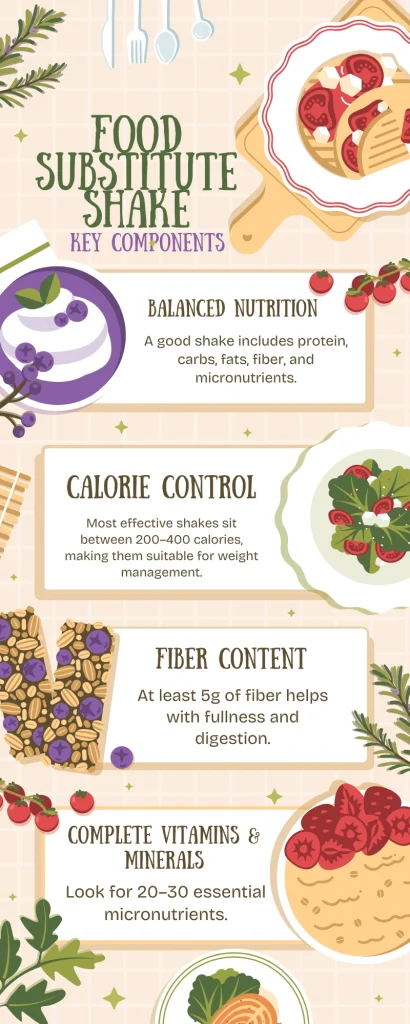
Key Components
When choosing a food substitute shake, look for:
✅ Balanced Nutrition
A good shake includes protein, carbs, fats, fiber, and micronutrients.
✅ Calorie Control
Most effective shakes sit between 200–400 calories, making them suitable for weight management.
✅ Fiber Content
At least 5g of fiber helps with fullness and digestion.
✅ Complete Vitamins & Minerals
Look for 20–30 essential micronutrients.
Benefits of Foods Substitute Shakes
1. Convenient Nutrition
Perfect for busy mornings, travel days, or skipped lunches.
2. Supports Weight Loss
Replacing one meal daily can help create a calorie deficit while still providing nutrients.
3. Portion Control
Pre-measured servings reduce overeating.
4. Helpful for Medical or Elderly Nutrition
Often used when chewing or appetite is limited.
Downsides & Considerations
Food substitute shakes are helpful—but not perfect.
⚠ They Shouldn’t Replace All Meals
Whole foods provide enzymes, phytonutrients, and texture that shakes can’t replicate.
⚠ May Lack Variety
Relying only on shakes can lead to nutrient gaps over time.
⚠ Some Are High in Sugar or Artificial Ingredients
Always check labels.
Common Uses for Foods Substitute Shakes
Weight Loss
Replacing one or two meals per day can support calorie control.
Weight Maintenance
Replace one meal to avoid overeating.
Busy Lifestyles
Quick breakfast or lunch when cooking isn’t possible.
Nutritional Support
Used for elderly individuals or during recovery.
Can You Replace Food With Shakes Long-Term?
Most experts recommend using foods substitute shakes as a supplement, not a permanent replacement.
A healthy approach looks like this:
- 1 shake per day
- 2 balanced whole-food meals
- Snacks from real foods
For personalized plans, consulting a registered dietitian is ideal.
Foods Substitute Shake vs Whole Food Meals
| Category | Food Substitute Shake 🥤 | Whole Foods 🥗 |
|---|---|---|
| Convenience | Very high | Moderate |
| Fiber | Moderate | High |
| Enzymes & Phytonutrients | Limited | High |
| Satiety | Moderate | Higher |
| Long-Term Health | Supportive | Essential |
How to Use Foods Substitute Shakes Safely
Step 1: Choose Quality Brands
Look for complete nutrition and minimal added sugar.
Step 2: Replace Only One Meal Daily
Start slow to see how your body responds.
Step 3: Add Whole Foods
Pair shakes with fruits, nuts, or salads.
Step 4: Stay Hydrated
Liquid meals don’t replace water.
Best Times to Use a Foods Substitute Shake
- Morning breakfast rush
- Post-workout (meal replacement version, not protein-only)
- Busy lunch breaks
- Travel days
FAQs About Foods Substitute Shakes
What shake can replace a meal?
Meal replacement shakes designed with balanced macros and vitamins can replace one meal.
Are meal replacement shakes OK for you?
Yes, when used occasionally or once daily as part of a balanced diet.
Can you replace food with shakes?
Short-term yes. Long-term, whole foods should remain the foundation of your diet.
Are protein shakes the same as foods substitute shakes?
No. Protein shakes focus mainly on protein, while food substituting shakes provide full nutrition.
Do foods substitute shakes help with weight loss?
They can help when used strategically to control calories and portion sizes.
Final Thoughts
A foods substitute shake can be a powerful tool for convenience, weight management, and nutritional support—but it works best when paired with real, whole foods.
Think of it as a helper, not a replacement for healthy eating.
Used wisely, meal replacement shakes can simplify your routine while keeping nutrition on track.

Hi, I’m Katty, and I love helping home cooks find easy, tested ingredient replacements that actually work. All substitutes on this site are based on real kitchen experience and food science — so you can cook confidently every time!