Yeast Substitute: Best Alternatives for Baking Without Yeast
If you’re out of yeast or need a quick workaround, don’t worry. There are several effective yeast substitutes that can help your baked goods rise—especially for quick breads, pizzas, pancakes, and cakes. While no substitute perfectly mimics yeast’s fermentation flavor, the right option can still deliver great texture and lift.
This guide covers the best substitutes for yeast, how to use them, and which one works best for different recipes.

Here our best tested and tasted Honey Substitute and Cocoa Powder Substitute .
What Does Yeast Do in Baking?
Yeast is a living microorganism that ferments sugars and produces carbon dioxide. This gas causes dough to rise and creates a light, airy texture—especially in bread and pizza dough. Yeast also adds flavor through slow fermentation.
Because yeast is unique, substitutes work best for quick breads and fast recipes, not traditional artisan bread.
Best Yeast Substitutes (Ranked)
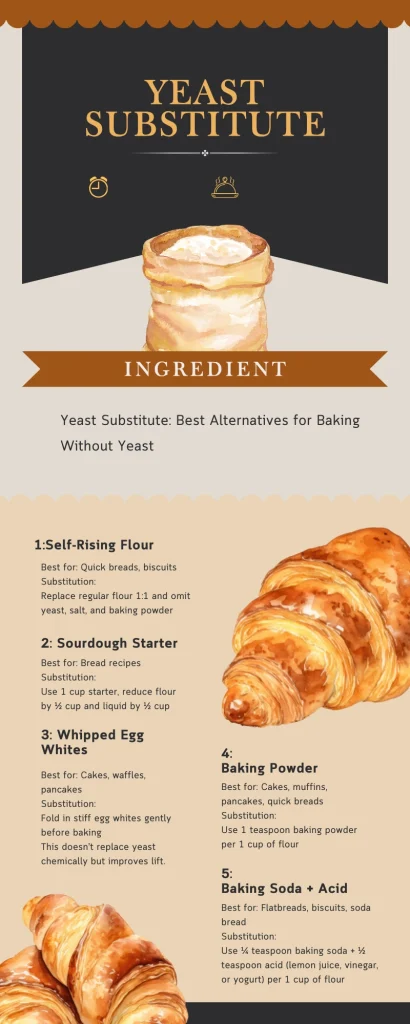
1. Baking Powder (Best Overall Substitute)
Best for: Cakes, muffins, pancakes, quick breads
Substitution:
Use 1 teaspoon baking powder per 1 cup of flour
Baking powder already contains an acid and a base, so it activates as soon as it’s mixed and heated.
Pros:
✔ Easy 1:1 style use
✔ Widely available
✔ No resting time
Cons:
✖ No yeasty flavor
✖ Not ideal for chewy bread

2. Baking Soda + Acid
Best for: Flatbreads, biscuits, soda bread
Substitution:
Use ¼ teaspoon baking soda + ½ teaspoon acid (lemon juice, vinegar, or yogurt) per 1 cup of flour
This combination creates carbon dioxide instantly.
Pros:
✔ Strong rise
✔ Pantry-friendly
Cons:
✖ Must bake immediately
✖ Slight tang if unbalanced
3. Self-Rising Flour
Best for: Quick breads, biscuits
Substitution:
Replace regular flour 1:1 and omit yeast, salt, and baking powder
Self-rising flour already contains leavening agents.
Pros:
✔ Convenient
✔ Consistent results
Cons:
✖ Limited control over salt and rise
4. Sourdough Starter (If Available)
Best for: Bread recipes
Substitution:
Use 1 cup starter, reduce flour by ½ cup and liquid by ½ cup
Sourdough starter contains natural yeast and bacteria.
Pros:
✔ Closest flavor to yeast
✔ Natural fermentation
Cons:
✖ Requires prep
✖ Longer rise time
5. Whipped Egg Whites (Texture Boost)
Best for: Cakes, waffles, pancakes
Substitution:
Fold in stiff egg whites gently before baking
This doesn’t replace yeast chemically but improves lift.
Pros:
✔ Light texture
✔ No chemicals
Cons:
✖ No fermentation
✖ Not suitable for bread dough
Best Yeast Substitute by Recipe
| 🍞 Recipe Type | 🔄 Best Yeast Substitute |
|---|---|
| Bread (quick) | Baking powder |
| Pizza dough | Baking powder + yogurt |
| Cakes & muffins | Baking powder |
| Biscuits | Baking soda + acid |
| Pancakes | Baking powder or egg whites |
Can You Make Bread Without Yeast?
Yes—but it will be quick bread, not traditional bread. Yeast-free bread is denser and less chewy but still delicious for everyday use.
FAQs About Yeast Substitutes
What can I use instead of yeast?
Baking powder, baking soda with acid, self-rising flour, or sourdough starter are the best options.
Can baking powder replace yeast?
Yes, especially in quick recipes. Use 1 teaspoon baking powder per cup of flour.
Is there a yeast substitute for pizza dough?
Yes. Use baking powder with yogurt or milk for a soft, quick pizza base.
Will yeast substitutes taste the same?
No. Yeast adds fermentation flavor that substitutes can’t fully replicate, but herbs, garlic, or olive oil can enhance flavor.
Is yeast necessary for baking?
Not always. Many baked goods rely on chemical leaveners instead of yeast.
Final Thoughts
A yeast substitute won’t fully replace yeast’s complex flavor, but it can still help you bake successfully when you’re in a pinch. For fast recipes, baking powder or baking soda with acid works best. For deeper flavor, sourdough starter is your closest match.

Hi, I’m Katty, and I love helping home cooks find easy, tested ingredient replacements that actually work. All substitutes on this site are based on real kitchen experience and food science — so you can cook confidently every time!